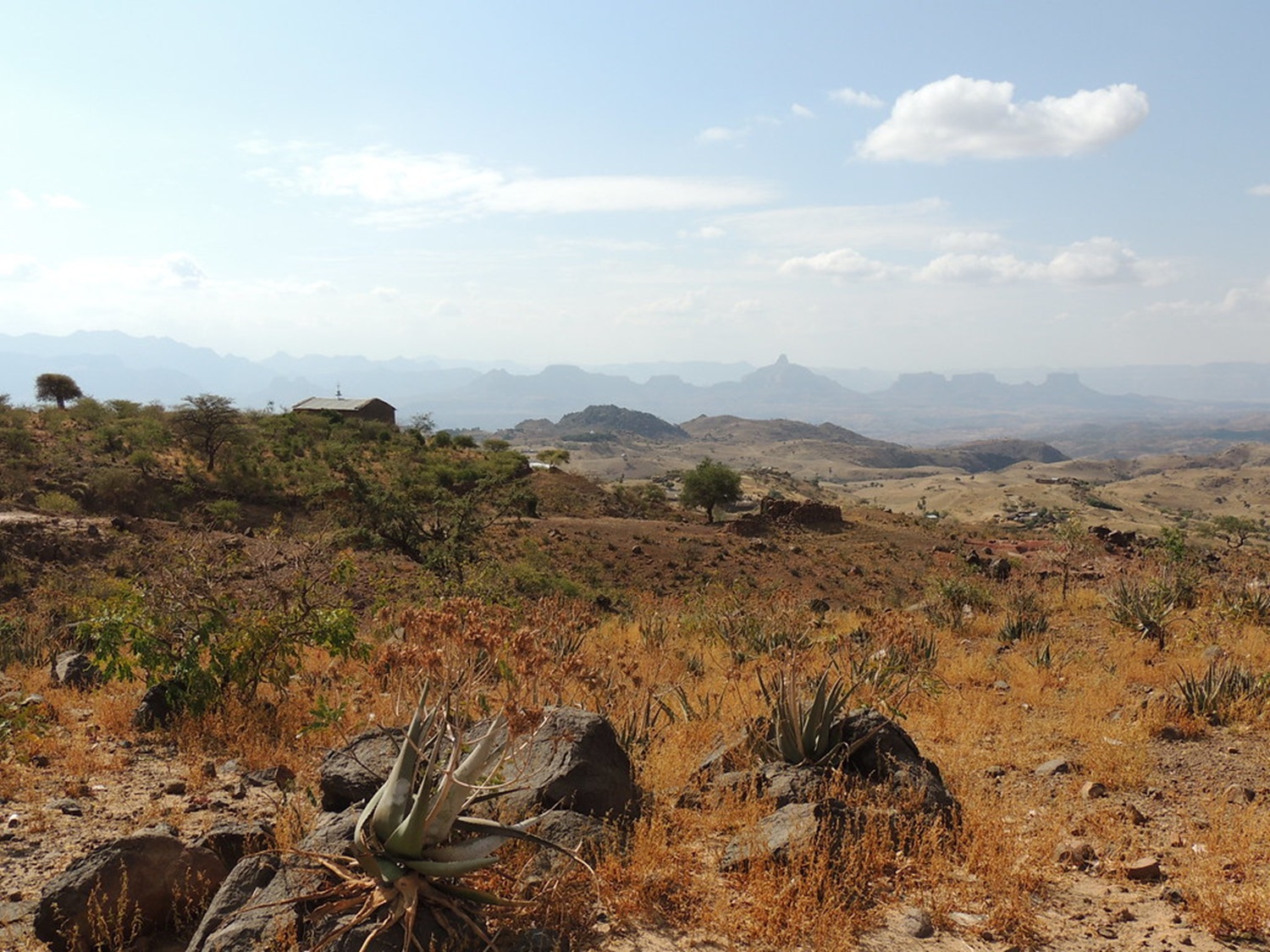
Four years after the peace agreement that ended two years of devastating war in Tigray (around 600 000 dead and 800 000 refugees between 2020 and 2022), the sound of gunfire is back in northern Ethiopia.
This time, several armed groups — Amhara, Afar, Tigrayan and others — have come together under a single coalition, the Alliance of Ethiopian People’s Forces for Survival. The Tigray People’s Liberation Front (TPLF) has allied with some of its former enemies, and its forces, the Tigray Defence Forces (TDF), have been swelled by months of forced conscription, as Afrique XXI reported in July. According to a statement from the UN Human Rights Office1 (OHCHR), published on 25 September, the same practice has reportedly also been used by the Ethiopian National Defence Force (ENDF).
Accounts vary, but the first casualties already run into the hundreds, and the displaced into the tens of thousands — including 150 000 people uprooted along the front line between the Afar region and Tigray, according to a humanitarian source cited by AFP2 on 28 September. The Ethiopian federal government, for its part, says it has killed 272 TDF fighters in the Amhara region3. Hospitals, flooded with both fighters and civilians, are said to already be overwhelmed and lacking the means to treat them.
Although the roots of this conflict are Ethiopian, a wide range of regional and international players have a stake in it — Sudan, Eritrea, the United Arab Emirates, and even the United States and Israel, as Mehdi Labzaé, a CNRS research fellow and specialist on Ethiopia, explains in this interview. For Afrique XXI, he previously covered the 2020-2022 civil war and went on to report extensively on its aftermath, including a series on the refugees of that conflict.
A reversal of alliances between the Fano and the TPLF
Michael Pauron: Can we pin down when this new civil war began, and who started the fighting?
Mehdi Labzaé: As with the previous war, it’s hard to say who fired first. But we know there was heavy fighting in August, with strikes on TPLF positions near the Sudanese border that reportedly caused heavy casualties. Government forces have hit military convoys, but also schools and clinics, including in the Amhara region.
Michael Pauron: Where is the fighting heaviest?
Mehdi Labzaé: The most intense fighting is in southern Tigray — around Korem, Maychew, Samre — as well as in Afar and various parts of the Amhara region.
Michael Pauron: Who are the forces involved?
Mehdi Labzaé: About ten days ago, a coalition of several regional players was announced, called the Alliance of Ethiopian People’s Forces for Survival. It brings together the TPLF, which governed Ethiopia from 1991 to 2018 as part of a coalition that designed the country’s current ethnic-federal system. The TPLF fought against the federal government in the Tigray war, which ran from 2020 to 2022.
Then there’s the Amhara Fano National Movement, a significant force. It’s a coalition of Fano nationalist militias claiming to represent the Amhara people. Historically, Amhara elites played a central role in building the Ethiopian state. For a long time, being Ethiopian was almost synonymous with adopting Amhara culture. In the 1970s, a number of groups, including the TPLF, began challenging that dominance. The TPLF took power in 1991 and, three years later, pushed through a new constitution — this time an ethnic-federal one.
This rapprochement between Tigrayans and the Fano marks a reversal of alliances, since during the 2020-2022 Tigray war, the Fano nationalist militias fought against the TPLF, alongside the federal army.
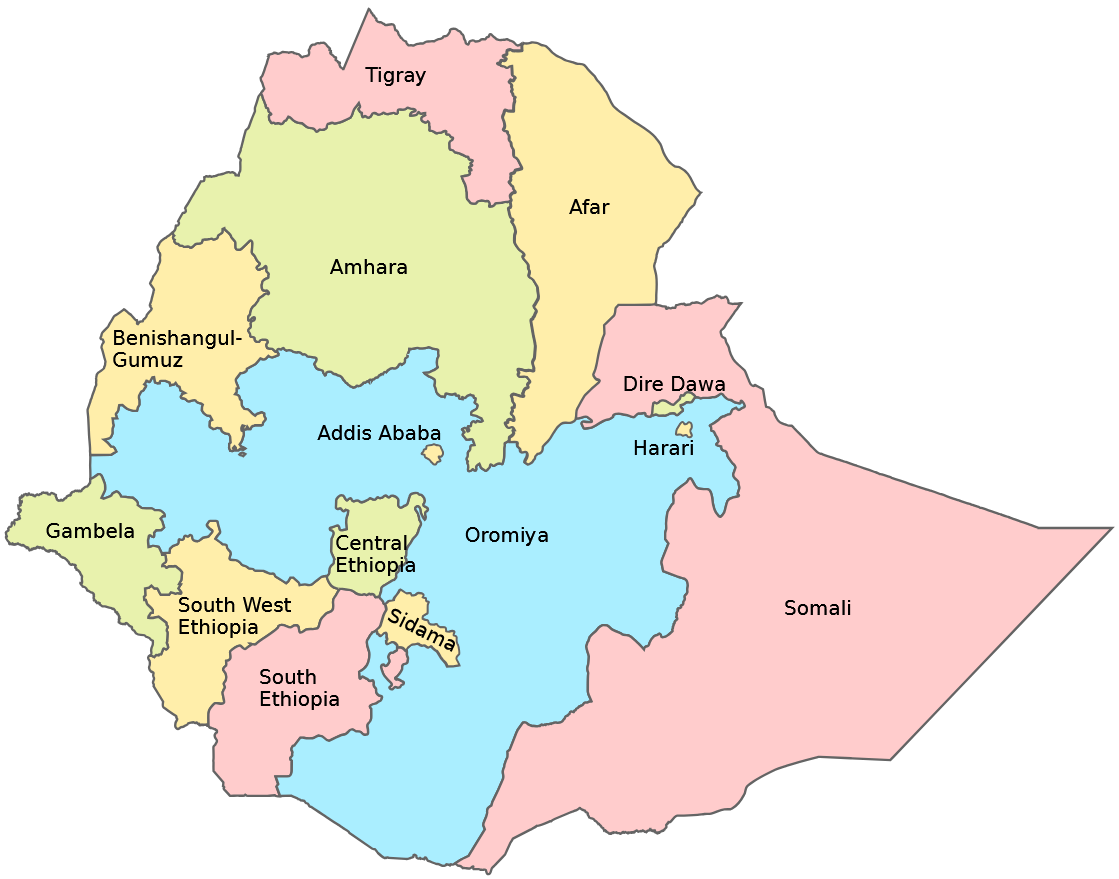
Next comes the Oromo Liberation Army, which is seeking autonomy for Oromia, Ethiopia’s most populous region with around 40 million inhabitants. There is also the Ogaden National Liberation Front, a still officially registered party that demands autonomy for the Ogaden, part of the Somali region in eastern Ethiopia. And the Gumuz People’s Democratic Movement, active mainly in northern Benishangul-Gumuz, which has fought against Amhara nationalists.
The Benishangul Liberation Movement is also present. It mainly represents the Berta population and draws support from members of that community based in Sudan. This group is believed to have ties to the Sudanese Armed Forces under General Al-Burhan.
Finally, there is the Afar Revolutionary Democratic Unity Front, backed by Eritrea, where it had found refuge. A week ago, this group seized control of Abala, one of the most important towns in northern Afar.
Michael Pauron: What is the Alliance’s goal?
Mehdi Labzaé: The coalition says it wants to overthrow the government of Prime Minister Abiy Ahmed. It says it wants to establish an inclusive transitional government representing every part of Ethiopian society.
According to the coalition, the understanding between these different groups isn’t merely tactical — short-term — but genuinely strategic, with a medium-term plan to govern together once the war is over.
Eritrea, Sudan, the United Arab Emirates…
Michael Pauron: You’ve mentioned two countries in the sub-region — Eritrea and Sudan. How deeply are they involved?
Mehdi Labzaé: The roots of the conflict are genuinely Ethiopian, not regional. But like any civil war, it is becoming internationalised. The coalition is indeed backed by Eritrea and Sudan.
Cooperation between Asmara and the TPLF isn’t new — it now goes back more than a year. It’s worth remembering they were fighting each other in 2020-2022. Here too, this is a reversal of alliances.
Khartoum is also backing the TDF, hosting them on Sudanese territory and allowing equipment to pass through. Some TDF members have fought in the civil war tearing Sudan apart for the past three years, alongside the Sudanese Armed Forces against the Rapid Support Forces (RSF), notably in Sudan’s Blue Nile state.
Michael Pauron: Why is Sudan getting involved?
Mehdi Labzaé: Because the Ethiopian federal government backs the RSF. It has given them the use of a base at Assosa, near the border in the Benishangul-Gumuz region, from which drones have been able to take off. It’s also from this base that RSF fighters set out to retake Sudanese villages around Kurmuk, in Blue Nile state.
Michael Pauron: Who can the Ethiopian federal government count on?
Mehdi Labzaé: Addis Ababa can count on support from the United Arab Emirates (UAE), which is supplying equipment, including drones. Turkey has also provided a large number of drones.
Leaks in the Israeli press, notably in Haaretz, have pointed to plans to engineer regime change in Asmara. The United States and Israel could be backing Eritrean armed opposition groups based in Ethiopia, allowing them to position themselves on the Bab-el-Mandeb strait. Ethiopia, for its part, would gain access to the sea in return…
This information strikes me as fairly credible: the statement issued by the US ambassador in Addis Ababa on 23 September4 was strongly pro-Ethiopian-government. It clearly condemned the TPLF.
The TPLF’s methods now resemble Eritrea’s
Michael Pauron: What is the humanitarian situation?
Mehdi Labzaé: We can already sound the alarm over a heightened risk of famine, for several reasons. First, rainfall has been well below average in northern Ethiopia — roughly half the usual level. Second, this famine has effectively been engineered by the federal government through blockades — of fuel, market supplies, humanitarian aid — by bombing water and health infrastructure, by blocking money transfers and creating a cash shortage…
In Tigray, an estimated 3.9 million people, out of 7 million, already need emergency humanitarian aid because of crop failures — and this is before the lean season has even begun. Add to that the obstruction of humanitarian aid, and every warning sign points to northern Ethiopia facing one of the worst humanitarian crises in its history, possibly as catastrophic as the one in 1984-1985.
For the TPLF, this will be an added difficulty if its fighters have to retreat into rural areas where people no longer have enough to eat.
Michael Pauron: The TPLF is resorting to forced recruitment. Are the people leading it today the same as in 2020?
Mehdi Labzaé: The TPLF has indeed pursued a policy of conscripting young people with a very high degree of coercion — going door to door, threatening parents, forcing them to hand over at least one child per family. In June, a disproportionate national security law was introduced. It exposes anyone, including Ethiopians living abroad, who spreads propaganda likely to obstruct this conscription drive to twenty-five years in prison. That includes social media posts.
The TPLF’s methods now resemble Eritrea’s. The current TPLF leadership bears little resemblance to the one from 2020, let alone the one from the 1990s. These leaders, who rose to power through factional infighting, have respected neither regional law nor the party’s own internal conflict-resolution procedures. Some of these military figures control gold-mining sites, among other things. The TPLF’s entire historic ideology — development, redistribution, the fight against poverty — has vanished.
Michael Pauron: What is the situation for refugees?
Mehdi Labzaé: The 800 000 people who fled the war in 2020 have never returned to western Tigray. Some are still in camps around various towns in Tigray, and will be the first exposed to famine; others are in different countries, including Libya, where the situation facing African migrants is well documented. Others still are on the road, heading for Saudi Arabia — a country where the regime has no hesitation in handing down death sentences to Ethiopians, for offences as minor as being caught with a small amount of khat.
But right now, a lot of young people tell me there’s simply no future left in Tigray. For many Ethiopians, the only way to take control of their own fate is to leave — even knowing the risks involved.

1« Ethiopia: Türk alarmed by civilian impact of hostilities, urges de-escalation », OHCHR, 25 septembre 2026.
2« As fighting intensifies, humanitarian source estimates at least 150,000 displaced in Afar, Tigray TV hit by drone », Addis Standard, 28 septembre 2026.
3« Ethiopian army says 272 Tigrayan fighters killed in Amhara », Al Jazeera Staff, AFP et Reuters, 24 septembre 2026.
4Ervin J. Massinga, « Statement on Recent Developments in Tigray and Afar », ambassade des États-Unis à Addis-Abeba, 23 septembre 2026.