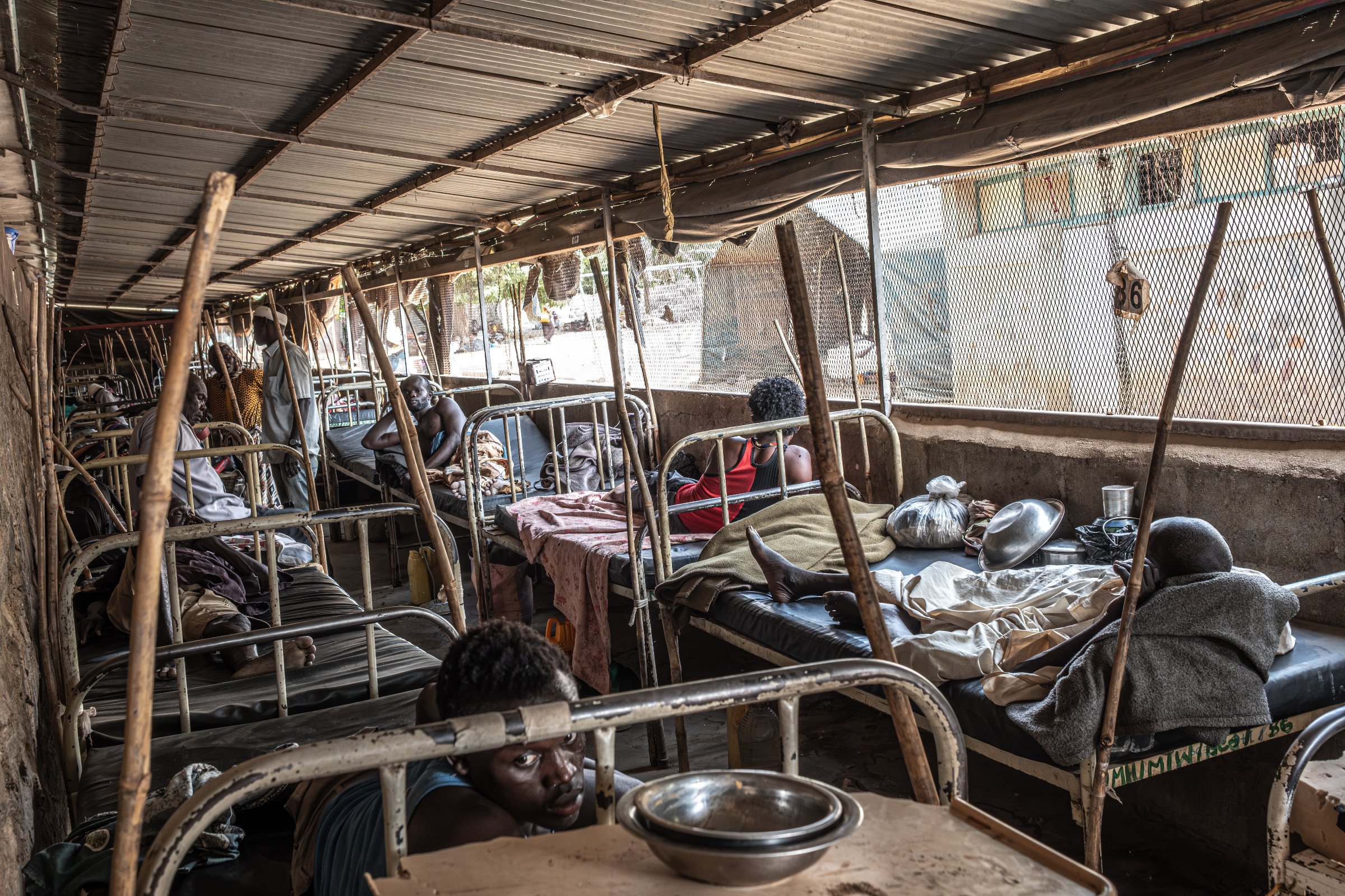
The air hangs heavy inside the tin-roofed wards of Mother of Mercy Hospital. In the dim light, dozens of patients—sick and wounded—are crammed onto metal beds, some lying on the floor for lack of space. In Gidel, deep in the Nuba Mountains of South Kordofan, this Catholic hospital, founded in 2008, has become a lifeline in a region long defined by isolation, neglect and decades of conflict. There are no paved roads here, no public electricity grid.
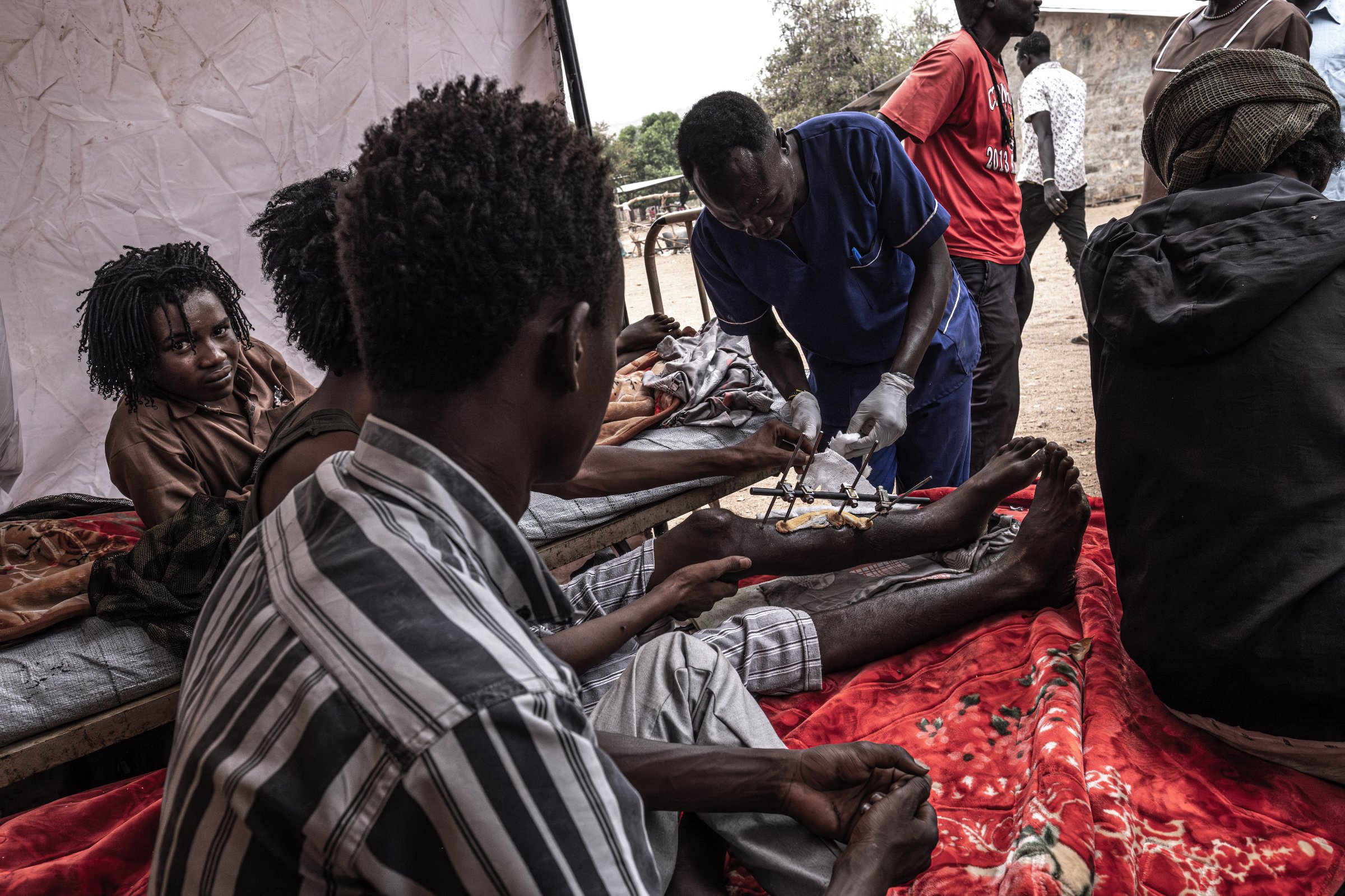
At dawn, Dr Tom Catena, an American physician who has worked in the region for more than 15 years, begins his daily rounds. With a headlamp strapped to his forehead, he moves from one patient to the next, trailed by a small team of nurses and doctors. He examines wounds, adjusts dressings, issues instructions, then moves on without pause. After this first round, he heads straight to the operating theatre, where he works late into the evening. In this remote hospital, he performs an average of 30 surgeries a day. Since the resumption of civil war on 15 April 2023, an increasing number involve gunshot wounds and injuries caused by drone strikes.
-
 A room packed with patients at the Mother of Mercy Hospital in the Nuba Mountains (South Kordofan State, Sudan).
 -
 Dr Tom Catena treats patients at Mother of Mercy Hospital in the Nuba Mountains (South Kordofan State, Sudan).
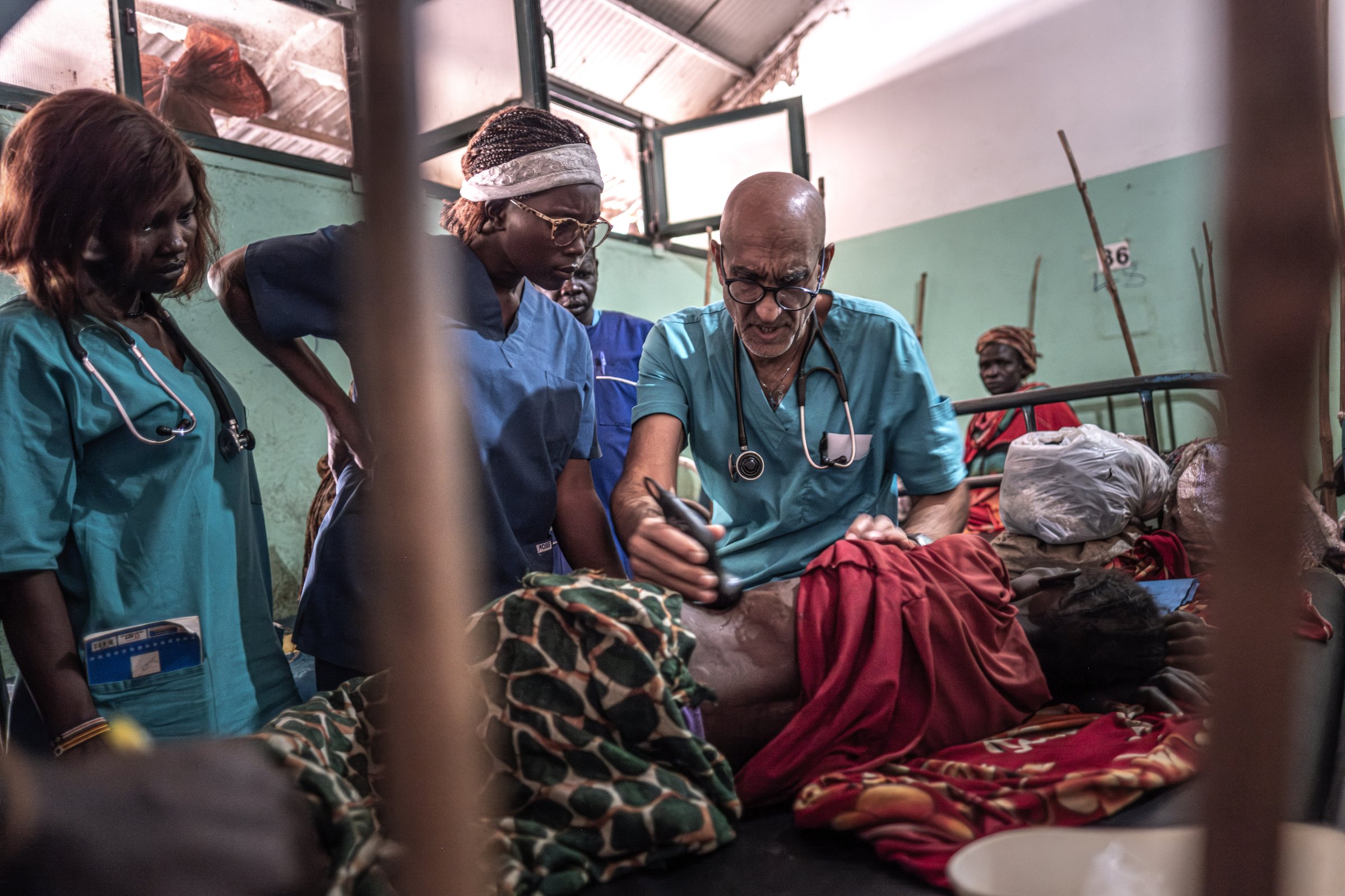
“The sad reality is that we mostly see wounds to the arms and legs,” Catena says, his voice steady as he works. “When people are hit in the chest or abdomen, they usually don’t make it here.”
There is no real ambulance network, he explains. A handful of vehicles stationed at clinics allow for transfers, but there is no emergency service to call. In a region without a functioning phone network, “you simply can’t pick up a phone and call someone”. The few Starlink connections that once existed have been cut as fighting has intensified. “Authorities are worried information could be passed to the enemy,” he says.
A new frontline
Most of the wounded arrive after hours—sometimes days—of travel, on foot or crammed into the back of vehicles navigating impassable tracks. Many die along the way. In a hospital that serves as a last resort, the war is now etched into bodies.
For three years, Sudan has been engulfed in a conflict between the Sudanese Armed Forces (SAF), led by General Abdel Fattah al-Burhan, and the Rapid Support Forces (RSF) of General Mohamed Hamdan Dagalo, known as Hemetti. The fighting has spiralled into one of the world’s worst humanitarian crises: more than 12 million people have been displaced—around 9.5 million within Sudan and over 3 million across its borders—making it the largest displacement crisis on the planet. The death toll is estimated at more than 150,000.
South Kordofan has emerged as one of the war’s key flashpoints. The towns of Kadugli and Dilling, held by the SAF, remain under constant pressure, cut off by fighting and restricted access. Since late 2025, the region has effectively become a new frontline, marked by repeated clashes, bombardments and the growing use of drones. Around these urban centres, the RSF control large swathes of rural territory and key routes.
In this region, they have allied with the SPLM-N, a politico-military movement formed in 2011 after the Nuba Mountains were excluded from the agreements that led to South Sudan’s independence. The group has long called for autonomy for local populations. It split in 2017 into rival factions. One, led by Abdelaziz al-Hilu, controls the Nuba Mountains, administering what amounts to a quasi-state while fighting the SAF. The other, led by Malik Agar, has moved closer to the central government in Khartoum.
“My family was just glad I survived”
In a war where drones have become a central weapon, the wounded increasingly bear the marks of targeted air strikes. In recent weeks, medical infrastructure has come under particular attack, caught in a spiral of retaliation between the two sides.
On 20 March, a drone strike attributed to the SAF hit Ed Daein Teaching Hospital in East Darfur, killing dozens and rendering the facility inoperable. Less than two weeks later, on 2 April, a strike attributed to the RSF hit al-Jabelen hospital in White Nile state, killing at least 10 people and injuring more than 20, in what appeared to be a direct reprisal.
-
 Hassan Koko is a health worker in Gidel, in the Nuba Mountains. He was injured during a drone strike near a market in Kauda (South Kordofan State, Sudan).
 -
 Hassan Koko shows his injuries. Pieces of metal are still lodged in his leg.
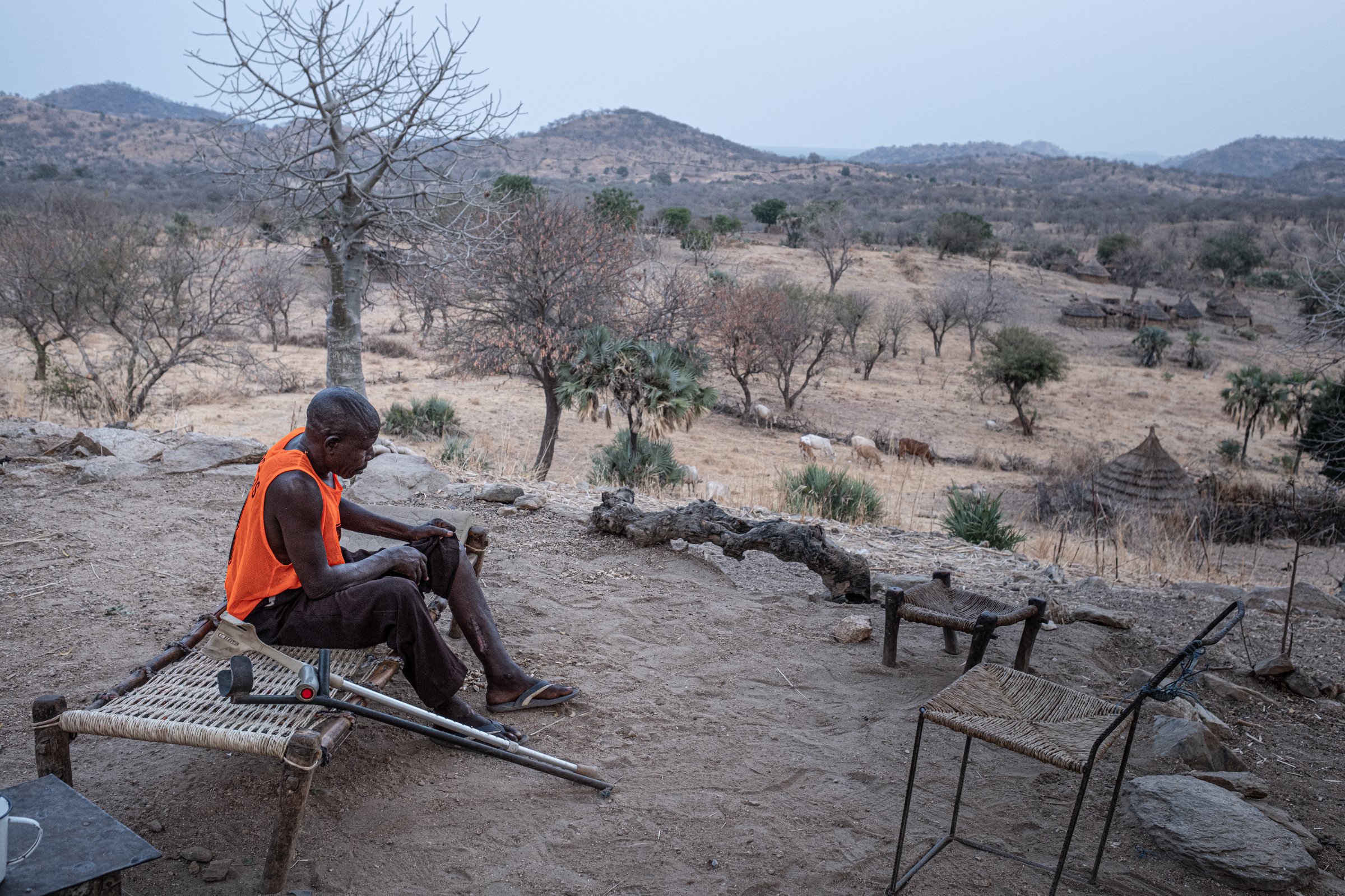
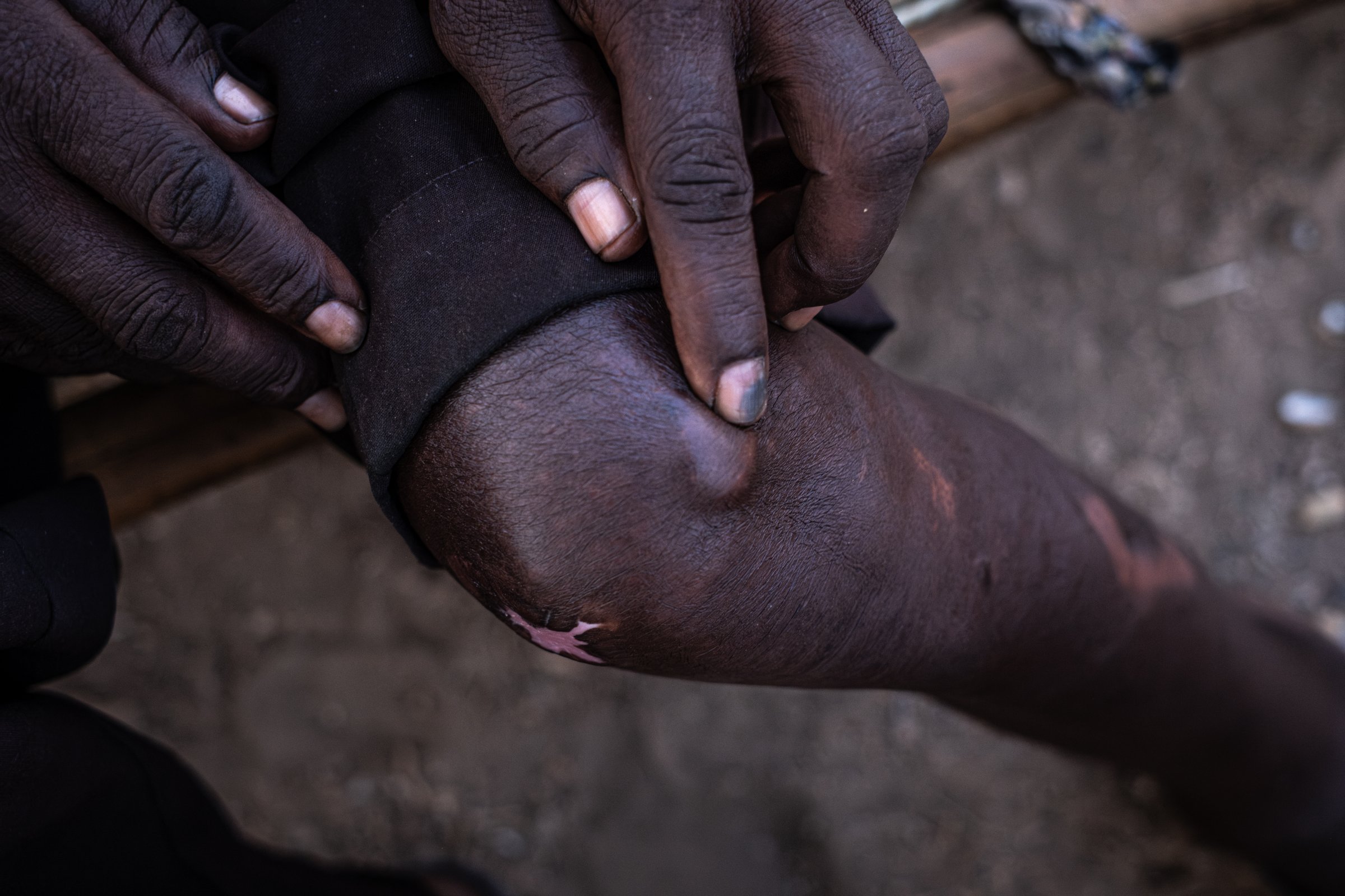
“The drone struck once, then came back and hit those who were already wounded,” says Hassan Koko.
Sitting with crutches by his side, the community health worker looks out over the hills surrounding his village near Gidel. Behind him, traditional Nuba tukul huts cling to rocky slopes, built high up for concealment and protection from bombardment. In November 2025, Koko was injured in a drone attack near a market in Kauda. Fragments of metal still remain lodged in his leg.
“My family was happy I survived. They thought I would die,” he says. “But life is no longer the same. I can’t move around these steep mountains on my own.”
An expanding air war
Until recently, strikes in the Nuba Mountains had remained sporadic. But as the frontline draws closer, fears of escalation are growing.
According to Jalale Getachew Birru, a senior East Africa analyst at Armed Conflict Location & Event Data (Acled), such attacks form part of a broader strategy targeting essential civilian sites. “Strikes on hospitals and public infrastructure are designed to create insecurity—and sometimes to inflict a second level of harm when the wounded arrive for treatment,” she says.
Acled data shows more than 1,000 drone strikes recorded across Sudan since April 2023, including at least 65 in South Kordofan alone—a sign of the gradual expansion of aerial warfare into regions previously shielded by their remoteness.
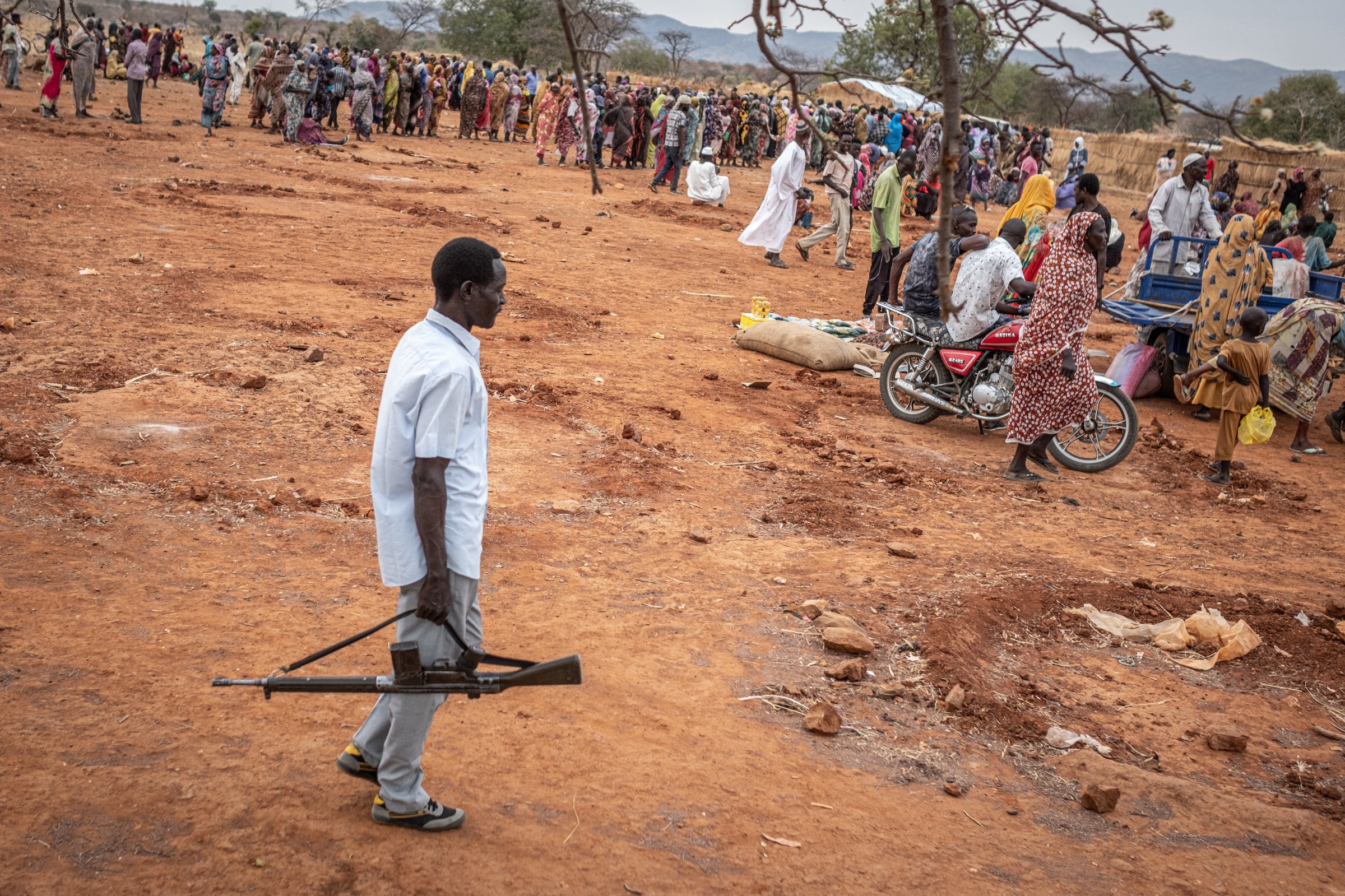
In the Nuba Mountains, the war is visible not only in wounded bodies but also in the movements of people it creates. Entire families from other parts of the country are settling in these hills, hoping to find relative safety.
In Kauda, the SPLM-N’s administrative centre, Jalal Abdulkarim, who oversees the movement’s humanitarian wing, describes unprecedented pressure. With little funding, most staff—including himself—work on a voluntary basis. He points to a figure scribbled on a piece of paper: 2,885,393—the number of people who have arrived in areas under the movement’s control since the war began.
“Every night, it was rat-tat-tat-tat”
Aid in the Nuba Mountains has long depended on NGOs and international agencies, themselves grappling with severe funding cuts.
“Where organisations once gave one or two million dollars, now they give 500,000 or even 200,000,” Abdulkarim says. “Funding is one of our biggest challenges.”
According to the International Organization for Migration, more than one million displaced people are in Kordofan. But limited access, the absence of a UN presence in areas such as Kadugli, and the scaling back of many NGOs make these figures uncertain, while vast humanitarian needs remain unmet.
Further into the rugged terrain lies the reception camp of Umm Dulo. On this stretch of dry land, thousands of displaced people have erected makeshift shelters from branches and plastic sheeting, often beneath acacia trees. With the rainy season approaching, the camp risks turning into a sea of mud, where runoff mixes with waste and human excrement.
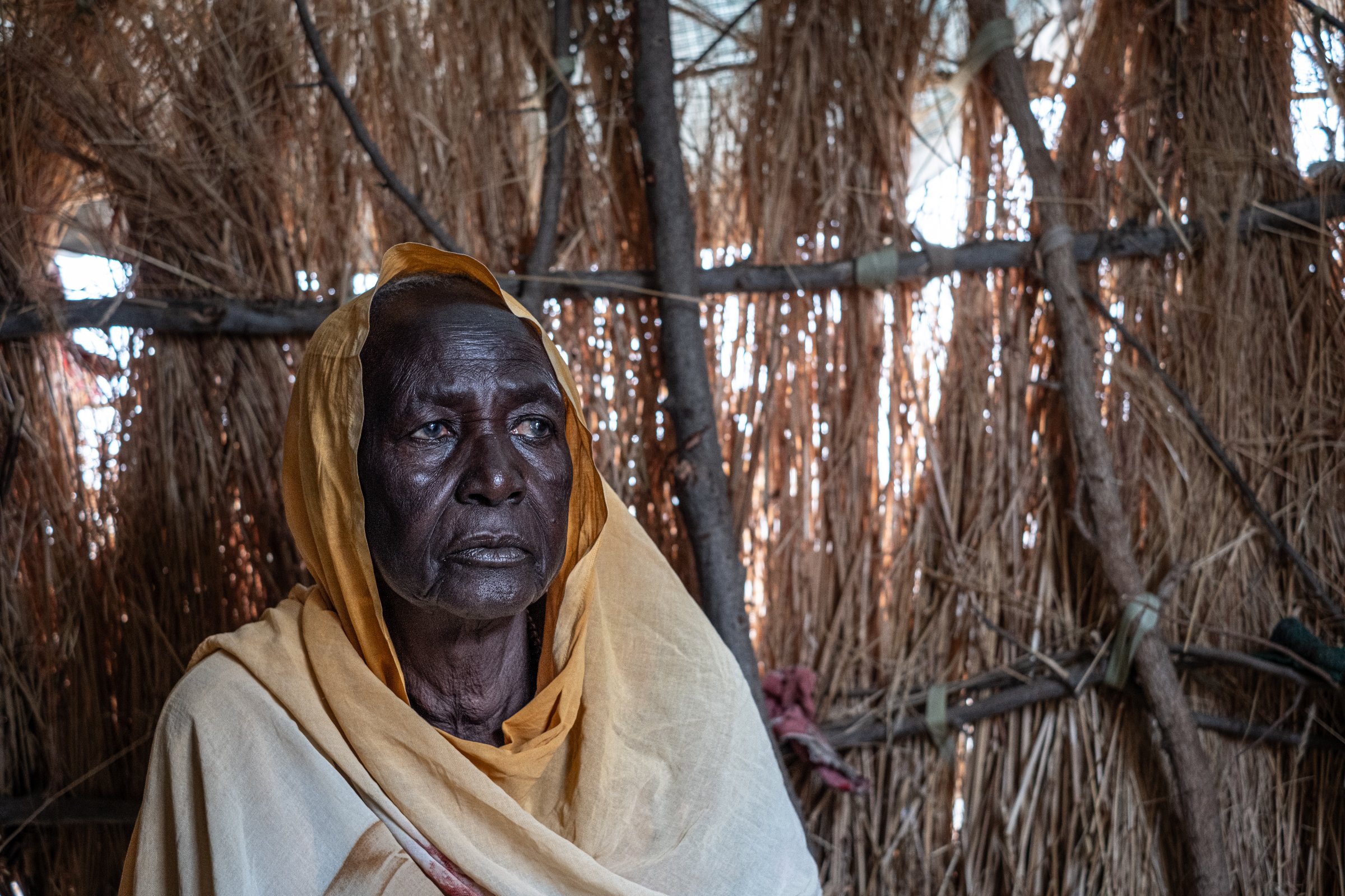
In zone 12, at the far end of the camp, which hosts more than 34,000 people, new arrivals crowd together.
Fatma Eisa Kuku, 76, fled Kadugli, the capital of South Kordofan. Sitting inside her fragile shelter, she appears frail, her gaze tired. She says she lacks the strength to move and prefers to remain in the shade, away from the bustle.
“I couldn’t sleep,” she says. “Every night, it was rat-tat-tat-tat,” mimicking the sound of gunfire.
“We live with them, but we don’t trust them”
Now, she says, her sleep is calmer. But the violence remains etched in memory.
Some members of her family were arrested in security sweeps, accused of collaborating with the enemy—the RSF.
“They came between dawn and dusk, and I never saw my brothers again. I don’t know who they were. If you ask questions, you’re met with hostility.”
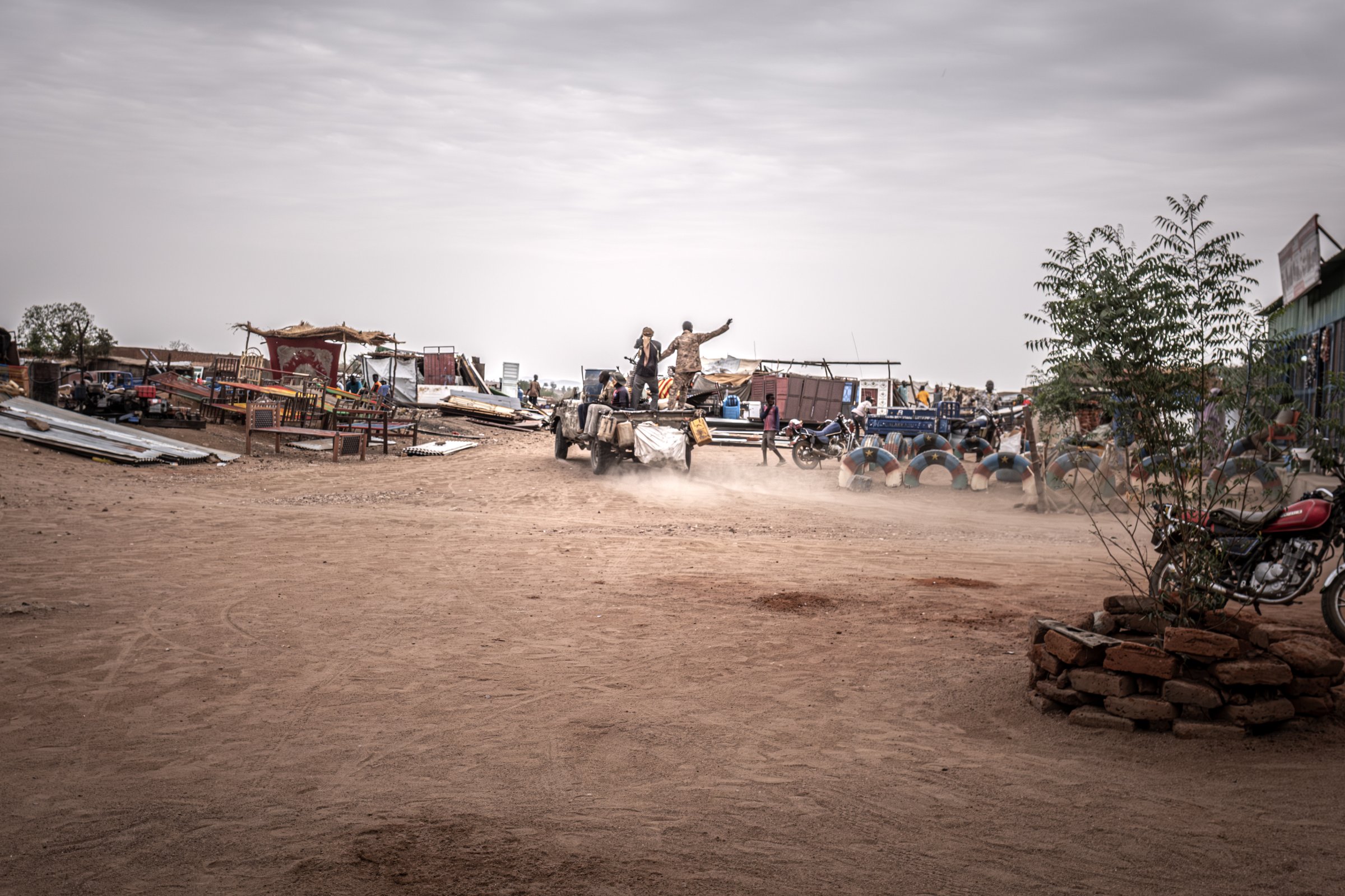
Not far from the camp, along one of the main tracks crossing the Nuba Mountains, a daily market comes to life in a small settlement—a scene repeated across the region. RSF fighters move freely, in armed pickup trucks or on foot. They stop at stalls, eat in roadside eateries, and sell goods looted from other parts of Sudan: cars, beds, fuel, fertiliser, electronics.
At first glance, their presence appears woven into everyday life. But beneath this apparent normality lies deep unease.
-
 Two FSR fighters are walking along a road on the outskirts of Kauda, in the Nuba Mountains (South Kordofan State, Sudan).
 -
 An FSR fighter sells goods and electronic devices looted from other parts of Sudan at a market near Umm Dulo in the Nuba Mountains (South Kordofan State, Sudan).
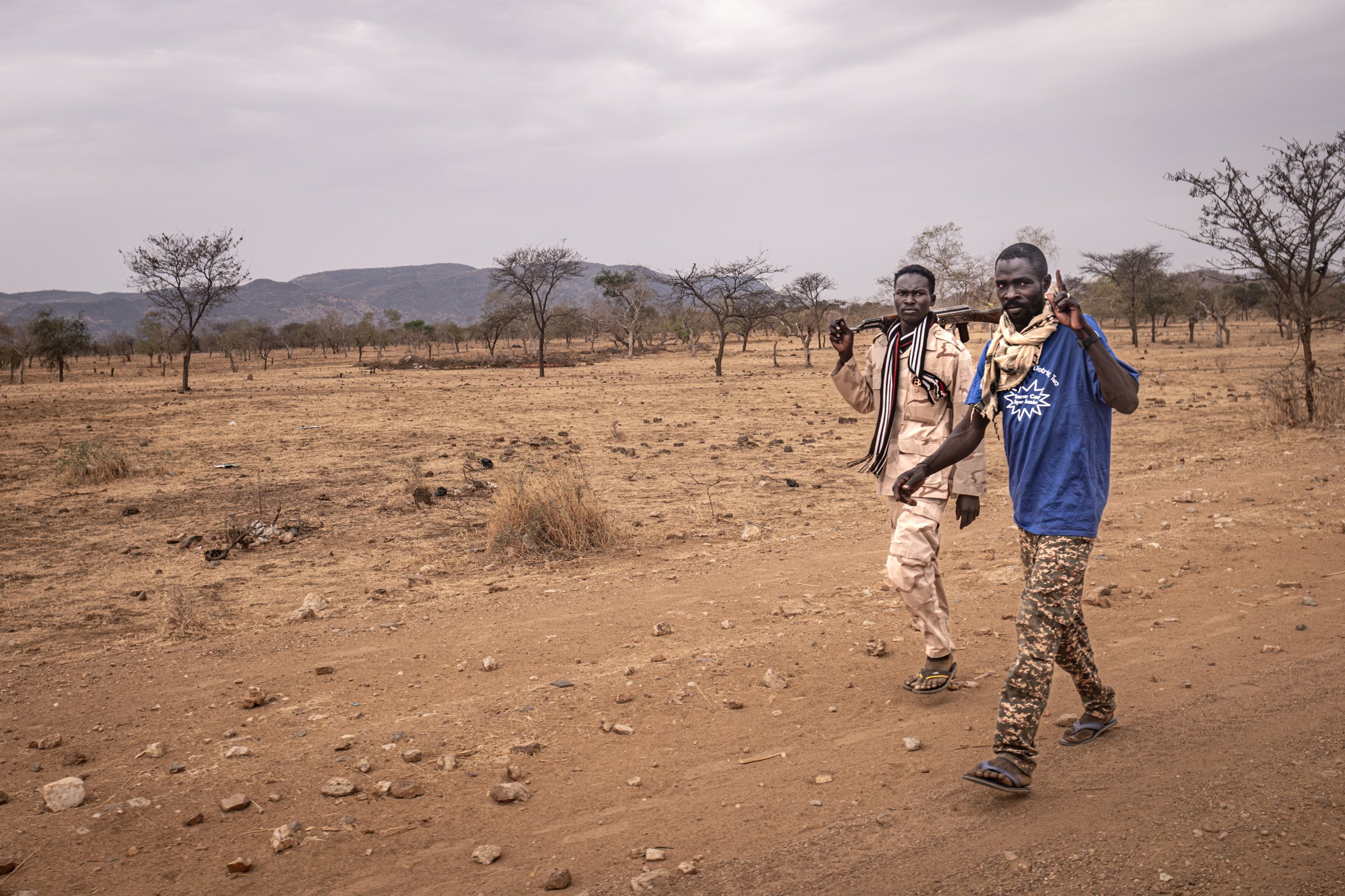
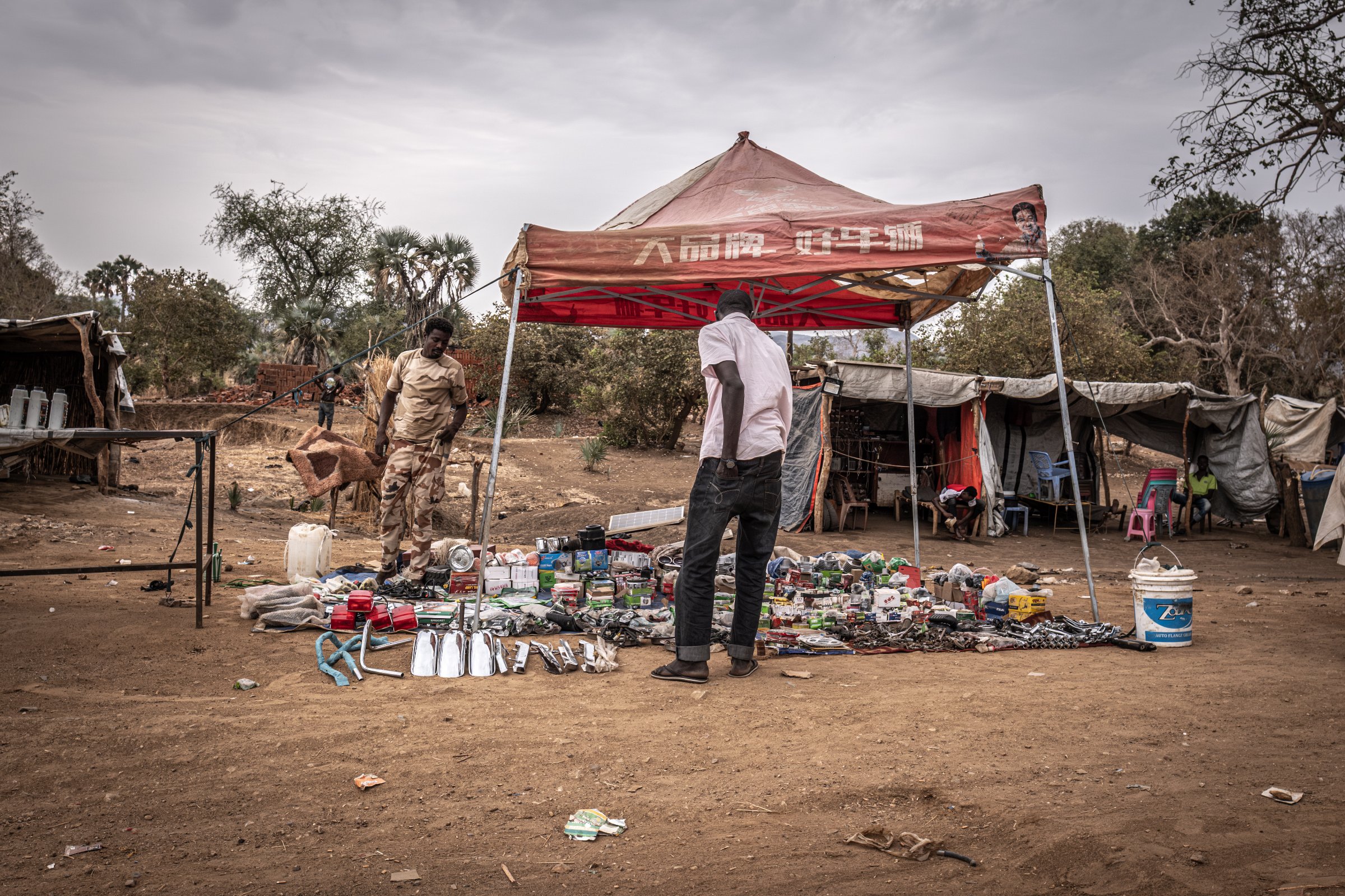
“We live with them, but we don’t trust them,” says a local priest, who asked not to be named.
Here, as elsewhere in the Nuba Mountains, everyone knows that the presence of fighters can turn civilian spaces into potential targets.
An uneasy alliance
The visible and increasingly open presence of RSF fighters in populated areas is a recent development, stemming from a controversial alliance with the SPLM-N.
Sealed in February 2025 under the so-called Tasis Alliance, the agreement marks a major turning point. It brings together two forces long at odds: on one side, the RSF, accused of serious war crimes in the current conflict—notably in El Fasher in Darfur—and widely seen as heirs to the Janjaweed militias responsible for past atrocities, including in the Nuba Mountains; on the other, the SPLM-N, which acts here as a de facto government.
Details of the military terms remain unclear. But credible reports suggest the RSF have established training camps in areas controlled by the SPLM-N.
For the RSF, the stakes are clear: expanding influence into territories where they lack local roots, relying on the SPLM-N’s networks and knowledge of the terrain, while securing access to strategic resources. The region is rich in gold, a key driver of Sudan’s war economy, whose exploitation and export—particularly to allies such as the United Arab Emirates—provide a major source of funding.
For the SPLM-N, the calculus is more complex. After initially staying on the sidelines following the outbreak of war in 2023, the movement led by Abdelaziz al-Hilu has adopted a pragmatic approach: avoiding direct confrontation with the RSF and aligning with “the enemy of its enemy” to contain the SAF. Politically, the alliance also reflects a shared vision of a deeply decentralised, federal Sudan.
Yet the alliance remains fragile.
“It is not a stable relationship,” says Jalale Getachew Birru, noting documented clashes between the two forces, as well as internal tensions within the RSF itself. When positions have been retaken by the SAF, both allies have blamed each other, fuelling speculation of a potential rupture.
“We have closely monitored these clashes to understand whether they signal a breakdown of the alliance,” she says.
Asked about the ultimate aim of both the conflict and the alliance, Jalal Abdulkarim is blunt: “We want our own system, our own autonomy—and, if possible, our own country.”
-
 A young member of the SPLM-N walks past traditional Nuba huts in a village in the Nuba Mountains (South Kordofan State, Sudan).
 -
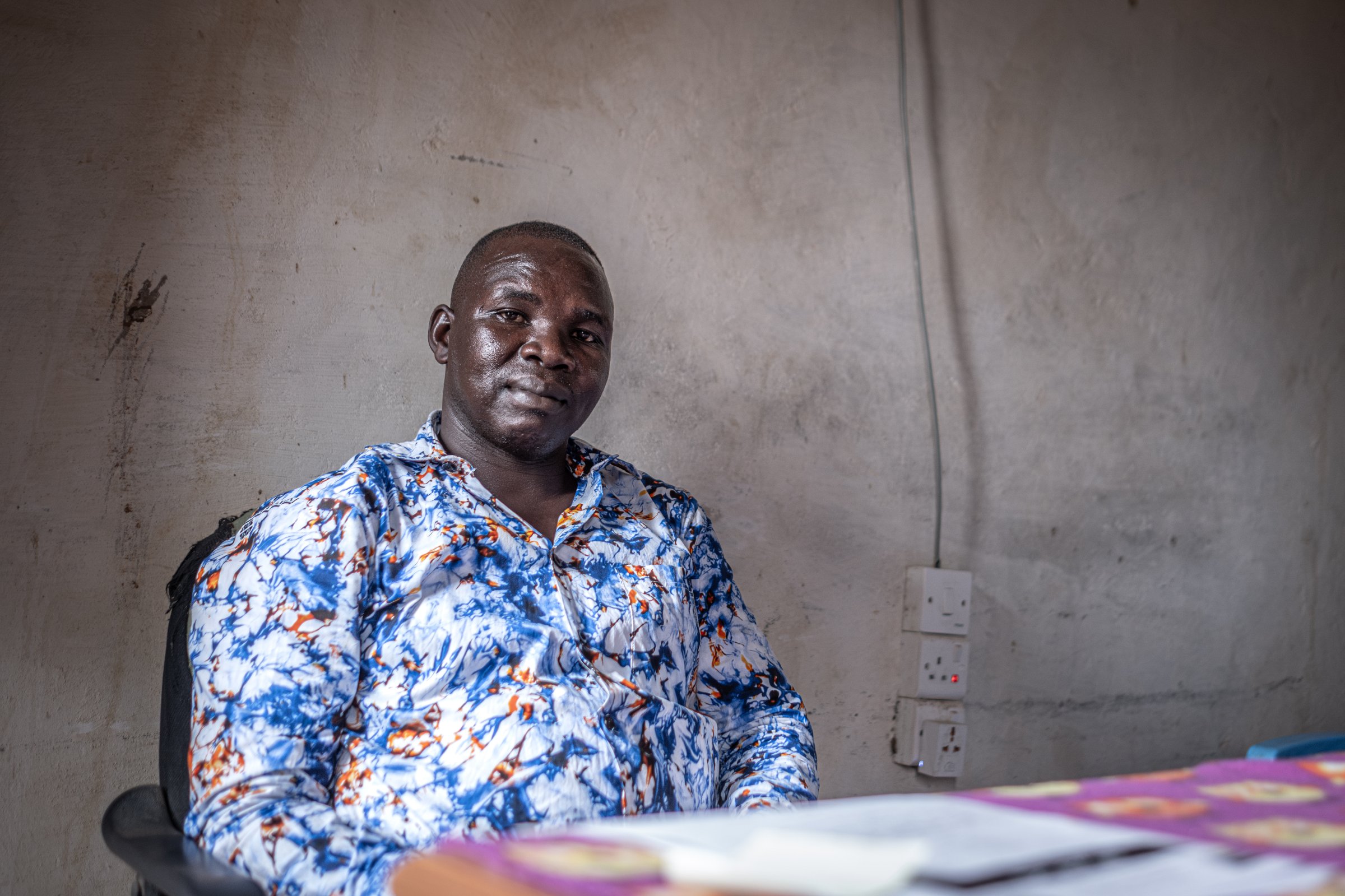
 Jalal Abdulkarim represents the humanitarian wing of the SPLM-N, which coordinates the reception of displaced people in the ‘liberated areas’ in the Nuba Mountains (South Kordofan State, Sudan).
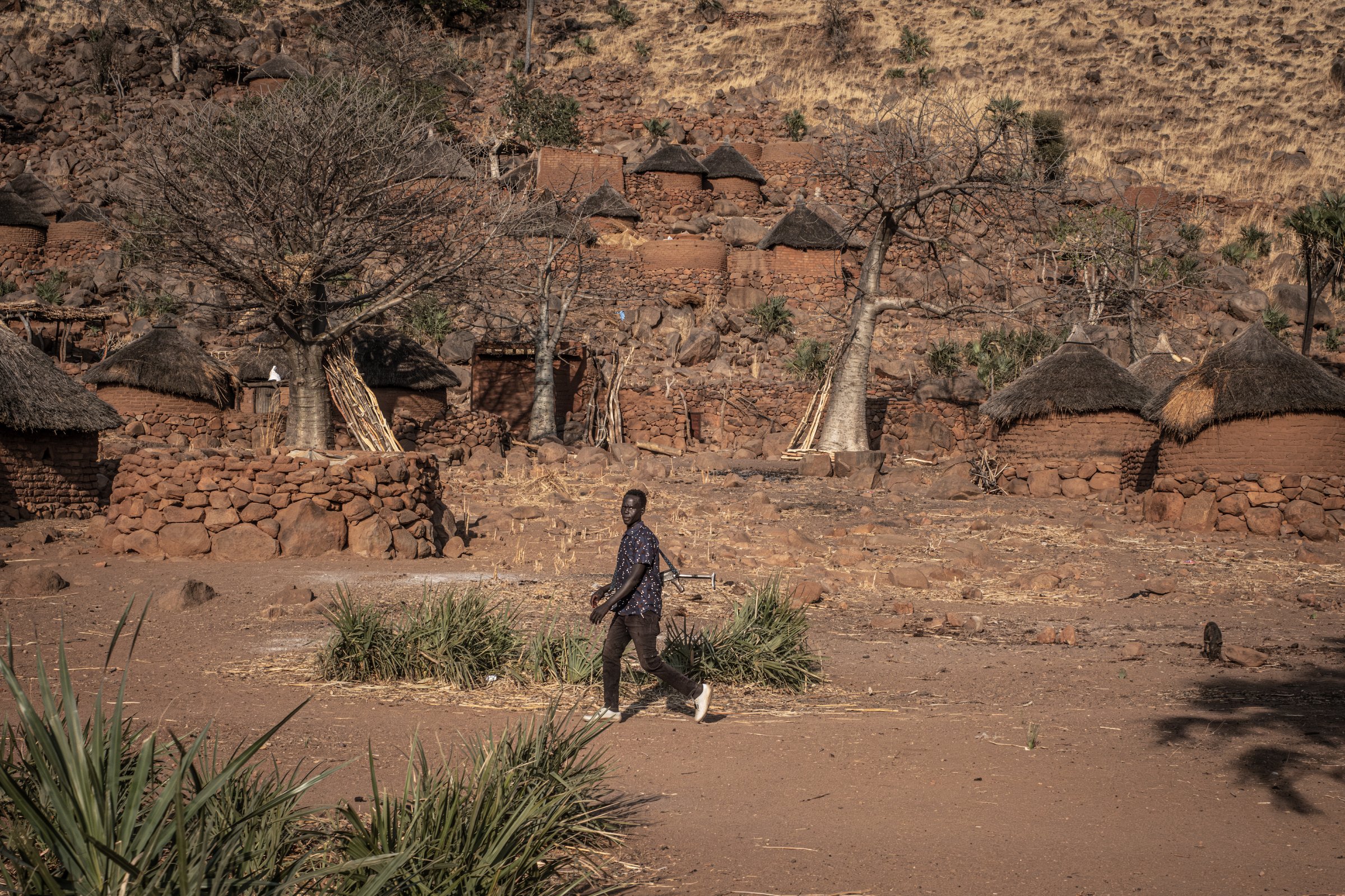
This stance reflects a long history. The Nuba Mountains have been marginalised since the colonial era, excluded from centres of power and left politically, economically and militarily isolated. Since Sudan’s independence in 1956, the region has endured repeated conflicts—particularly after 2011, when it remained in the north despite its proximity to South Sudan—marked by bombardments, forced displacement and the destruction of infrastructure.
Against this backdrop, the 2025 alliance with the RSF also appears as a compromise. After decades of struggle, and amid intensifying war, some local actors seem willing to engage even with former enemies in the hope of securing political gains, protecting territory and preserving a degree of autonomy.
A shared hospital
Inside Mother of Mercy Hospital, care is provided to all. Civilians and fighters lie side by side on the same beds, and “no incidents have been reported between them and the civilian population”, says Dr Catena.
Among them are young RSF soldiers, treated like any other patient.
Around Hassan Hamid, a fighter from Darfur wounded in clashes near Dilling, others rest after surgery, smoking cigarettes and exchanging jokes to mask their pain.
Despite the accusations of war crimes against the RSF, he defends his involvement.
“We are fighting because the government in Khartoum is not doing enough,” he says. “There are not enough hospitals, infrastructure or schools. We want change.”
For now, in the Nuba Mountains, he says he has found an unexpected refuge.
“I want to stay here,” he says. “I want to live in the Nuba Mountains forever.”