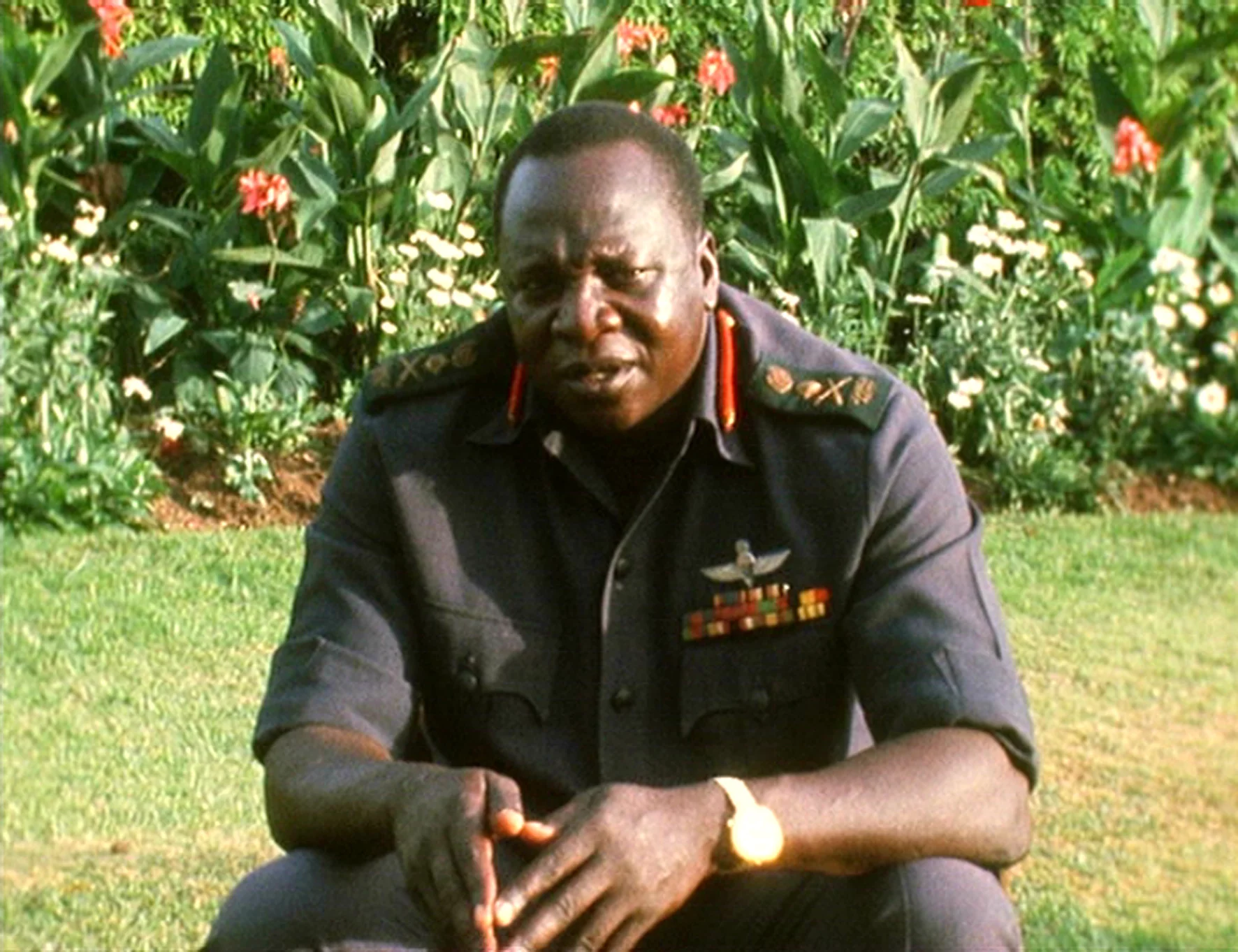
Mahmood Mamdani’s new book1 is a deeply layered story full of new insight in the making of the Ugandan state by presidents Idi Amin, and Yoweri Museveni and the ambitious designs of more powerful outsiders. Besides the extensive use of little-seen archives, Professor Mamdani has a close-up, lived, view of much of this history. His family was expelled from their home in Uganda by President Idi Amin, and he spent years in the university circles of Dar es Salaam and Kampala where Yoweri Museveni was a known, if somewhat fringe, member. The book reveals much detail about both leaders and how, differently, they failed their people. It also contests the cliched portrait of Idi Amin (who came to power in a coup in 1971 and was ousted in a coup in 1979).
Mahmood Mamdani, father of Zohran, the new mayor of New York in place since January 1, teaches at Colombia University, in New York, in the departments of Anthropology, African studies and Political Science where he is the Herman Lehman Chair. He is also chancellor of the International University of Kampala, in Uganda, and honorary professor of the Centre for African studies at Capetown university. He was formerly director of the Institute of social research at Makerere, the biggest university in Uganda. He is the author of more than a dozen books.
In this last work, entitled Slow Poison, Idi Amin, Yoweri Museveni, and the making of the Ugandan State, published by Harvard University Press, in October 2025, Mahmood Mamdani analyses the construction of the Ugandan state under the presidents Idi Amin, and for four decades, Yoweri Museveni, revealing the influence of the various foreign powers which played dominating roles. Israel, Great Britain and then Tanzania, were the key players initially, followed by the United States.
“The Israelis more or less laughed him off”
Victoria Brittain: Why did the British/Israeli coup which brought Idi Amin to power in 1971 turn so sour for all concerned?
Mahmood Mamdani: The British thought they knew Idi Amin. He was a child soldier, four years younger than the British official records show. And he was trained as a specialist in counterinsurgency - a polite term for state terrorism. His training included fighting the Mau Mau in Kenya, and pastoralists in northeastern and western Uganda. He was very comfortable with the British, and they with him. He also went to Israel with Milton Obote [president of Uganda from 1966 to 1971 and from 1980 to 1985] in September 1962 and stayed on there for paratrooper training. The Israelis realised his potential use from his role in Congo operations as Obote’s conduit with the Maoist rebel movement of Pierre Mulele2.
Also, Idi Amin had been in South Sudan. For the Israelis, the key usefulness of Amin was the link he gave them to the Anyanya rebels in South Sudan. He was also key for their ambitions to use Uganda as the gateway to South Sudan and to the Arab countries to the north. This was the focus of the massive airport Israel built in Nakasongola on the road from Kampala to the north.
Idi Amin woke up to all this by chance when, representing Obote at the 1970 funeral of President [Gamal Abdel] Nasser [1918-1970], he met the Saudi Crown Prince Faisal [ben Abdelaziz Al Saoud, 1906-1975].In a discrete private meeting the prince asked him, “Why do you think the Israelis are building this airport except to have a southern route for their planes to attack Arab Muslim countries from the south? We don’t understand why you, as a Muslim, and the army commander, are part of this.” Idi Amin’s son Jaffar later recounted this meeting.
Victoria Brittain: In the coup the following year the British and the Israelis were confident in Idi Amin?

Mahmood Mamdani: They masterminded the coup together in 1971. The British did not deal with Uganda as much with the Israelis in Kampala as they did in Tel Aviv. This came out when the papers were declassified in London. They did more or less take Amin for granted. His first trip after the coup was to Tel Aviv and when he left Entebbe airport there were more Israelis to say goodbye to him than Ugandans. In Tel Aviv Amin explained what he wanted from them in the dangerous moment when there were so many dissident Ugandan soldiers in Sudan and in Tanzania. Amin wanted real firepower, including from the air, to hit Tanzania in particular. The Israelis more or less laughed him off. They gave him something much smaller. From his point of view, these were just military toys, although they did give him an aircraft.
Amin decided to fly straight to London, where the British did not know why he was coming. He was taken to have tea with the Queen. She asked him why he was visiting London. Amin was very quick on his feet and replied, “Oh, it’s the only place I can get my oversized boots, and it is the only place where I can find somebody to teach my fellows Scottish bagpipes.” Then at dinner the British found out why he came, and they played a similar game to the Israelis. They gave him something very different from what he wanted.
Amin decided to send his education minister, Abu Mayanja, to Egypt to see President [Anouar el-] Sadat. Mayanja went to Egypt, and wired Amin to say, “stop in Cairo on your way back”. President Sadat suggested to Amin to go to Tripoli and speak to President [Mouammar] Gaddafi.
At this point, Gaddafi had just helped President ([Gaafar] Nimeiry in Sudan avert a coup by the Communist Party leaders. He said to Amin, “you want our help, but you are working so closely with the Israelis. And you are a Muslim….we don’t understand…you speak Arabic, right? “ Amin spoke Nubi, a kind of arabic-based creole language, and was very fluent in recitating the Quran as he had been in Quranic school. Gaddafi told Amin he would have to convince Nimeiry that he was a friend, and to do that, he would have to join [Ethiopian] Emperor Haile Selassie at his coming conference in Addis Ababa. Additionally, he would have to bring the Anyanya with him, under his leadership. Amin did that, and also declared persona non grata the Israeli agent who was a consultant to the Anyanya.
The 1972 Addis Ababa agreement had Amin take half of the Anyanya, 20,000 men, into the Ugandan army, which was by then weakened by the violent killing spree in the barracks, under Israeli auspices. And Amin had also lost many soldiers with the split in the army and many following Obote to Tanzania or fleeing into Sudan. President Nimeiry agreed to close the army bases of Obote in Sudan, and to take the other half of the Anyanya himself. The Anyanya became his personal guard in time, and Nimeiry came to rely on them more than on anybody else.
The Asian expulsion increase Amin’s popularity
Victoria Brittain: So Amin had changed the regional political geography, and he went on to Uganda’s internal transformation?
Mahmood Mamdani: Yes, that year, 1972, Amin carried out three expulsions from Uganda. The first was the expulsion of the Israelis. The second was the Asian expulsion. And the third was the expulsion of the British.
The Israelis tried to resist, making coup attempts against Amin, using their close connections in the Army. The British approach was different , they joined the Tanzanians and Ugandan exiles in two different coup attempts. The first, in 1972, was a spectacular flop. Museveni had told [Tanzanian president Julius] Nyerere [1922-1999] that his group had an organisation inside Uganda, and once the guerrillas or the rebels came into the country, the population would rise up. Of course, the population did the reverse, hunting down the rebels and handing them over to the army. The exile invasion from Tanzania was the very day the Asian expulsion began. The Asian expulsion was very popular and began to increase Amin’s popularity in the country enormously.
Victoria Brittain: Can you talk about what you have called the anti-Amin propaganda industry wielded by Britain?
Mahmood Mamdani: The British press before the expulsion of the Israelis and the Asian expulsion treated Amin like a jolly giant, who was kind, and cruel, at the same time. “Our man is our giant.” The mood then changed rapidly. The lead influential media person was David Martin of The Observer, often followed by the Western press corps in Nairobi. For instance, David Martin wrote a completely fake story in August 1976 about a “massacre” involving at least one hundred and conceivably up to eight hundred women students on the campus at Makerere university being mutilated, “de-breasted”, and arrested by Amin’s soldiers. The Observer cited the precise place on campus. Many of us in Nairobi and Dar es Salaam called friends at Makerere to ask about it. Everyone reported that, yes, the army came in and they beat people up, but there was no arresting anybody or sexually abusing women – that simply did not happen.
Ugandans never really swallowed the Western narrative. Amin was brutal, but he was not the way the media painted him. The first detailed refutation of that narrative was by the respected Kenyan-born American academic, Ali Mazrui [1933-201] to the US House of Representatives in February 1978 – two years after the Makerere story. Professor Mazrui described the situation in Uganda as less an organised terror than an anarchy. It was the result of an ineffective central power and an army which had taken liberties into its own hands. One of the first decrees Amin passed had given the Army the right to arrest people, on suspicion, without going through any courts or the police. That set the stage for deteriorating relations between the army and the police.
A significant testimony refuting another well-known Idi Amin story - that he had killed his own son, Moses – came from the award-winning Kenyan photojournalist Mohamed Amin MBE3, who had swallowed many of the Amin brutality stories. During a visit to the Ugandan president, he asked him about the alleged killing of his son. Idi Amin called his son, Moses, who was there in the house. Mohamed Amin was shocked, and asked him where he had been, and Moses said he had been in France studying. Mohamed Amin admitted publicly that he had been duped.
Idi Amin had a cruel side. His brutality was public knowledge in the year following the coup, when the army split between those for and against him. The British suggested Amin assassinate Obote; the Israelis disagreed. They suggested he would need to kill Obote’s men; if not, he would have to deal with them later. So he did as advised, killing them in the hundreds, in one barracks after another. But then Idi Amin learned. His last five years show us a different man.
“Museveni embraced violence to build an oppressive state”
Victoria Brittain: Can you give some examples of a side of Amin different from the dominant narrative of inhuman brutality.
Mahmood Mamdani: That narrative captures one side of Idi Amin. But it ignores completely his enormous capacity to learn and to adjust. It ignores the ways in which Amin changed after he was disillusioned with the Israelis and the British. After he came back after the Addis Ababa agreement in 1972, he carried out a series of reforms. Three of them were outstanding.
The first was returning the body of the Kabaka from England for burial. The royal family and part of the landed elite were opposed to the returning the body until the kingdoms had been restored. But Idi Amin said in his speech, “we are burying the Kabaka with respect and we are also burying the kingdoms with respect.” There was no question of restoring kingship, though that is what Museveni did in 1995.
The second, later, after Haile Selassie was assassinated in 1975, was a land reform decree. Idi Amin told his cabinet “we have to learn from the Ethiopian revolution and the program of returning land to the tiller. Can you nationalise the land and give security of tenure to those tilling the land? Yes.” Again, Museveni reversed this in 1995 when he returned the land to the landowners.
The third critical issue was the question of growing militarisation. The police sent a delegation to Amin in April 1974 complaining about the military. Many people were being disappeared, their property stolen or their partners abducted. The police told him, “We have no powers to intervene in these cases. If we do, we become targets of the army.” Two months later Idi Amin set up a Commission of Inquiry into Disappearances in Uganda since January 25, 1971. It was headed by a British/Asian, Justice Mohamed Saied who had great credibility in the country because he had been Chief Magistrate in the Obote era political trial of the editor of Transition, Rajat Nyogi and Abu Mayanja, later Education Minister. Justice Saied had bravely dismissed all the charges, though Obote used his powers to put the two back in prison. Justice Saied as chair of the Disappearances commission had two other commissioners, one from the army, one from the police.
The commission began its work facing extreme skepticism in the country. But they took their hearings to 78 towns around the country, and the word spread that the Commission was very open and receptive to information brought to them, no matter of what type. They issued a detailed report of 800 plus pages.
This was the very first of the modern commissions of inquiry, the last of which was the Truth and Reconciliation Commission (TRC) in South Africa. But whereas all the other commissions looked at the previous regime, Idi Amin’s commission looked at his own regime, not Obote’s.
However, in one important respect Idi Amin’s commission was similar to the TRC, because the TRC in South Africa made a clear distinction between political responsibility and criminal responsibility. It was only interested in criminal responsibility. It was only interested in charging people against whom there was evidence that they were directly involved in the killing. Former president [Frederick] De Klerk [1936-2021] appeared and in his opening remarks admitted guilt for his part in apartheid. The Commission told him they were only interested if he was involved in direct human rights violations. The commission Idi Amin appointed took the same view. It absolved Idi Amin of any criminal responsibility and it did not have a word to say about political responsibility.
Victoria Brittain: In contrast to the Amin story, can you talk about what you have called the “complicity of silence” which shielded Museveni’s reputation once he was in power.
Mahmood Mamdani: Museveni’s learning experience went in the opposite direction. He wrote his undergraduate thesis in Dar es Salaam on Frantz Fanon, and was very eloquent about the justness and the necessity for revolutionary violence to dismantle an oppressive state. But in power he went in the opposite direction, and embraced violence to build an oppressive state.
When Museveni reached Kampala in 1986 he found the coffers empty, and he sent delegations to everyone in the Commonwealth, to the organisation of Islamic countries, to Canada, looking for aid. They all told him the same thing: settle with the International Monetary Fund (IMF) and the World Bank first. He did that and became a convert, and a convert who turned preacher. IMF delegations used to go to State House with chalk and whiteboard. They spent days giving him lectures on economics and on the need for structural adjustment. But there was a quid pro quo, as we have seen in so many countries which accepted the Washington consensus. Before long Museveni was heading into a crisis point with his people. He had opposition in parliament. He had greater opposition in the courts when he subverted the result of the election. When the highest court in the country ruled against him 4 to I he called up the Chief Justice and told him, “You are leaving me with no choice. I’ll have to hand over power to my commanders.” The judges changed their verdict to 3-2.
“In the North, 90% of the population were enclosed in camps”
Victoria Brittain: What about the extraordinary scale and incompetence of the corruption scandals you describe?
Mahmood Mamdani: There was of course a great deal of corruption. And it is important to know that it was no secret, it was mostly exposed in the newspapers and was discussed in Parliament. Every attempt to investigate it in detail was quashed by the president. Sometimes he would take responsibility for decisions which led to the issue or led to the appointment of people who did the scandal. Sometimes he ascribed it to the clumsiness of the bureaucracy. There were always excuses for those who had carried out the malpractices, sometimes it concerned his brother or his vice president or his ministers or senior bureaucrats. All those involved in the opposition talked about corruption, but it was clear that the president would block any investigation.
Victoria Brittain: What about the donors? Why did they just swallow what the president said? What cards did Museveni hold?
Mahmood Mamdani: They did not totally believe it. As I said, the blatant corruption etc was no secret. At one point the US ambassador, and I think the British ambassador, went to visit Museveni at his country home, and the ambassador read the riot act. He detailed corruption. He spoke of the need for a democratic transition, and for free and fair elections.
The Ugandan government had hired a Bible-quoting African American lady to put his case to the White House well before Museveni flew to Washington in January 20034. President [George W.] Bush said to him, “look, our system is we have a two terms limit. When I finish my second term, I am going to go and graze my own cattle. Don’t you want to go and graze your cows?”
But Museveni had offered the US a deal. “I will give you my army. You give me freedom to govern as I think necessary.” He had already been in rehearsal with such an implicit deal - in Rwanda when the Uganda army was there with the RPF (Rwanda Patriotic Front). Then the Americans refused to use the word genocide. But now Washington needed to be bailed. And Museveni’s army was there, in Somalia, then in South Sudan, then in eastern Congo. In that case there was a full UN investigation showing the extent of the looting and the direct involvement of Museveni’s brother and others. Museveni set up his own commission of inquiry, led by a British judge who again made the distinction between political responsibility and criminal responsibility. He said that the state was not responsible, only individuals could be held responsible.
Victoria Brittain: Can you talk about the government army’s assault in the 1990s on the Northern population, forcing them into camps, which you have described as “a colonial-style counter-insurgency” and as “independent Uganda’s darkest hour”?
Mahmood Mamdani: Kampala was determined on revenge in taking over the North: the objective was not only to defeat soldiers of the previous regime and any new rebels, but also to bring the population to its knees. It ended up with this remarkable programme where 90% of the population were enclosed in camps. I visited those camps. People there told me that when the Lords Resistance Army (LRA5) arrived, the government soldiers just withdrew and let the LRA do whatever they wanted, in these refugee camps.
From 1995 the aim was no longer to win, but to keep the war in the North going despite the resistance from army authorities and in Parliament. In 1996 [General] David Sejusa, representing the army in Parliament, told the chamber that the war was being “needlessly prolonged”, and could be “wound up.” There was huge popular sentiment for amnesty. Parliament passed an amnesty bill.
The international humanitarian agencies were much later in recognising that there was no justification for what they were doing looking after these camps. The most detailed self-critique was from the UN’s OCHA (Organisation for Humanitarian Affairs) in 2002, six years after the Army representative spoke to Parliament. The OCHA critique said that they had broken every law protecting refugees. Amnesty International followed with a self-critique, similarly the International Committee of the Red Cross and the World Food Programme. By the time [the Norwegian diplomat] Jan Egeland [UN-Secretary General for Humanitarian Affairs] had seen the camps and denounced them it was December 2003. By then Museveni was looking for a way out. Determined to rule out an amnesty, in 2004 Museveni invited the newly formed International Criminal Court to charge the LRA’s leader Joseph Kony with crimes against humanity. The Parliamentary amnesty bill became null and void.
Victoria Brittain: Can you finish with a reflection on your recent East Africa travels with the book?
Mahmood Mamdani: The first book launch was in Mombasa, with about 250 to 300 people. It is a small town and I was surprised by the numbers. Then came Nairobi, where my publisher had got a bookshop which holds 250 to 300 people, and people had to register. One thousand people did. So, the publisher changed the venue to the biggest hall in Nairobi and decided to charge for entrance. Everybody paid, and there were a thousand people inside, with many more outside. So, he hired the hall for a second day, and again it was full. There were 500 copies of the book, all sold.
My question was, why did so many people turn up? People do not turn up in these numbers for a book launch And, normally, they do not pay. And, thirdly, an event supposed to be one hour, became two hours. And the book signing took another hour. The only sense I could make of it was that more than the book and the interest in post-election Uganda [the last presidential elections were held in January NDLR] there was another dimension. In fact there are very few opportunities to discuss events ruling people’s lives, in a serious fashion. They had come to listen, to talk, to ask questions. I was amazed, and I got many requests to give more talks in Nairobi.
I was thinking of giving a talk in Kampala. But when I got here, I changed my mind. It would be a political event, not a book discussion. The leader of the opposition,[ Bobi Wine (Robert Kyagulanyi Ssentaamu) NDLR] left the country and was somewhere in Europe. He tweeted a photograph of himself reading my book, with the cover, and he quoted three or four things which were all over social media. If I gave a book talk, the opposition would likely raise its own issues, and my book would be a sideshow.

1A 17 page review of this book, by Ugandan political commentator Kalundi Serumaga, (link) finds “contradictions and conundrums” in Mamdani’s book, and among other important threads suggests “Mamdani struggles with the matter of the objective reality of it anti-African racism within the Asian community in both its structural and interpersonal senses.” Serumaga ends by crediting Mamdani for two things:” willingness to think again about a matter long cast in stone on the Ugandan global understanding on Amin, and also on a willingness to finally put his name to things long known about the dark underbelly of this regime [Museveni’s]and its tiresome myth of revolution, though others had been saying them from the start." Read it here.
2Amin’s mission in Congo was negotiating peace accords between the fighting rebel factions, organize training camps for the Lumumbaist rebels and facilitate exchanges of gold and other natural resources for arms.
3The MBE is an honour given by the King for services to the community.
4Rose Whitaker, a Washington lobbyist formerly an official in both the administrations of Presidents Bill Clinton and George W. Bush.
5The Lords Resistance Army is a movement created in 1988 which presents as Christian, in rebellion against the government of Uganda. “Since its emergence in Northen Uganda in the 1980s the LRA has kidnapped, killed and mutilated thousands of civilians in all central Africa. In 2005 and 2006, under heavy military pressure its leader, Joseph Kony, ordered its retreat from Uganda. The LRA continued its existence in the Democratic Republic of Congo (DRC), in Central African Republic, South Sudan and according to some information in Sudan.”, United Nations page one this movement.