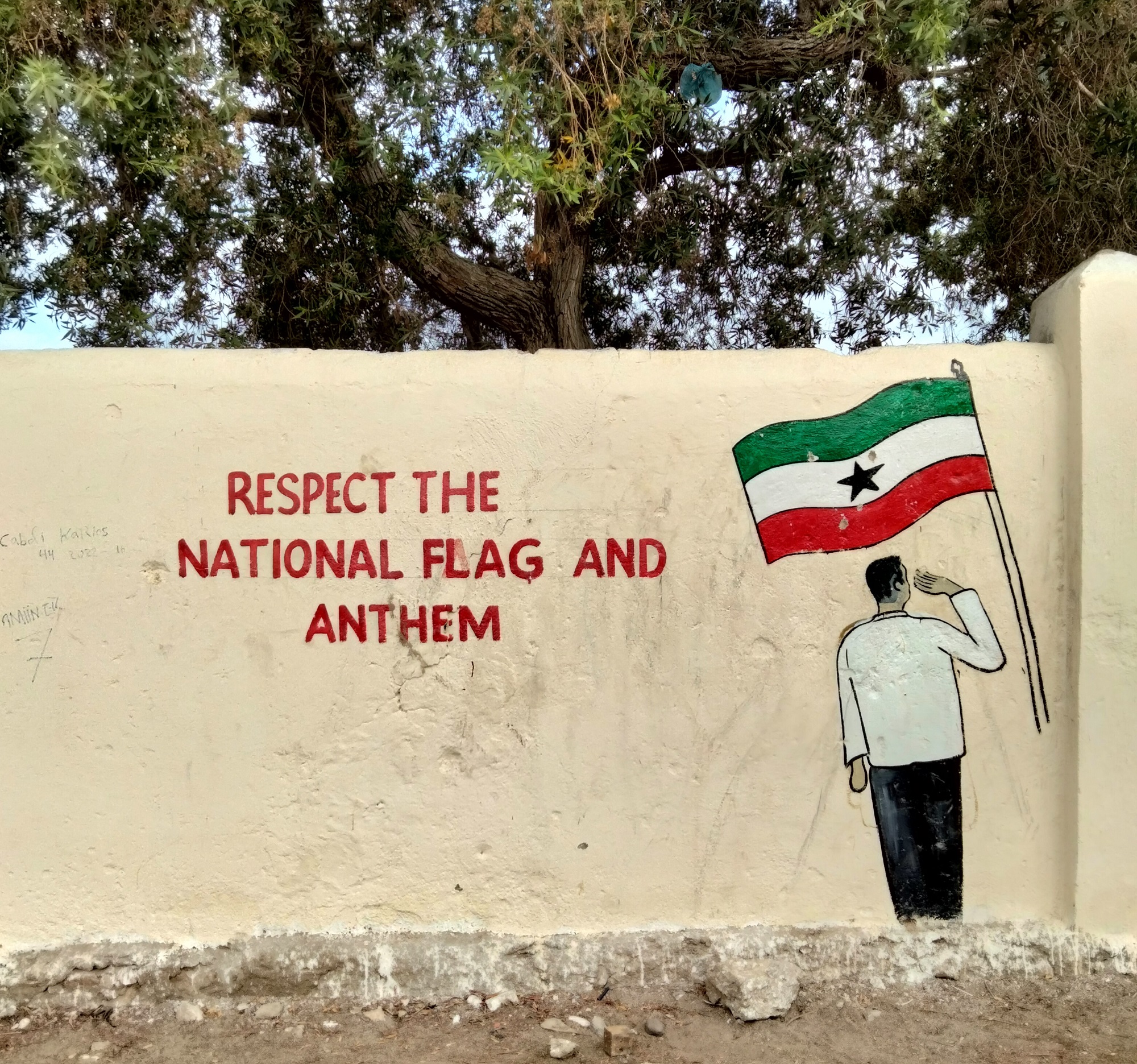
On August 8, during a press conference held after the signing of an agreement between Armenia and Azerbaijan, Donald Trump was asked about the possible recognition of Somaliland in exchange for hosting Gazan “refugees”. “Good question… we are thinking about it right now,” he replied. The political class of this territory formally independent since 1991 but still unrecognized by any state welcomed the U.S. president’s intention to (possibly) recognize Somaliland, while refraining from commenting on the proposed quid pro quo: the relocation of forcibly displaced Gazans.
Since Trump’s announcement on February 4 of a vaguely defined plan aimed at clearing Gaza of its inhabitants, Somaliland has been repeatedly cited as a potential host territory. As early as February 5, The Jerusalem Post1, citing the Israeli television channel N12, reported that the Trump administration was considering Somaliland, alongside Morocco and Puntland (an autonomous Somali region). A few weeks later, Somaliland was mentioned again, this time together with Somalia and Sudan2, whose authorities, however, firmly rejected the proposal. In Hargeisa, the capital of Somaliland, Foreign Minister Abdirahman Dahir Adam simply stated that he had not been approached on the matter3.
The issue has been further fuelled by recent revelations from the Financial Times 4 about a plan for the “temporary relocation” of part of the Gazan population to Somaliland and other territories presented to U.S. officials by Israeli businessmen, with support from consultants from the Boston Consulting Group (BCG), a firm already involved in the deployment of the highly lethal Gaza Humanitarian Foundation.
“Donald Trump Is a Good Leader”
The caution and silence maintained by Hargeisa on this issue have fuelled speculation about a possible rapprochement with Washington and Tel Aviv. On the one hand, the Somaliland government has refrained from endorsing a pseudo-U.S.–Israeli deportation plan, given that no formal offer of recognition has been made and that it does not wish to alienate segments of its population and political partners who are sensitive to the Palestinian cause. On the other hand, it has been careful not to reject the proposal outright, so as not to jeopardize its relations with the United States and the prospect of recognition from Washington — a precedent that could encourage other countries to follow suit.
Somaliland President Abdirahman Mohamed Abdullahi, known as “Irro”, has himself initiated this strategy. Asked about the issue in an interview with the Saudi channel Sky News Arabia on February 13, he limited himself to praising his U.S. counterpart: “Donald Trump is a good leader. As soon as we are officially approached, we will be able to clearly express our position.”5
This cautious approach is intended to appease the U.S. administration, in the hope that the forced deportation project will fade away on its own. Beyond its unpopularity amid a genocidal war, such a plan would make Somaliland complicit in crimes against humanity. The Somaliland government therefore hopes that any potential offer of formal recognition will be limited to elements tied solely to U.S. strategic interests. Having clearly grasped Donald Trump highly transactional approach, it is now seeking to extract an agreement in exchange for strengthened security ties (maritime security and counterterrorism) and the establishment of a military base in the coastal city of Berbera — a subject that has been discussed for years. The granting of mining concessions is also under consideration. The Somaliland government could concede some of these elements without Trump ultimately offering recognition, insofar as bilateral relations would nonetheless be strengthened and given greater visibility.
Alignment With the United States
Betting on the United States has been one of the main drivers of Somaliland’s diplomacy for years. The former head of state Muse Bihi Abdi (in power from 2017 to 2024) was a major promoter of this approach, hoping to finally see his country gain recognition. Numerous contacts were established within the U.S. political and security apparatus during his tenure. Somaliland’s independence resonates particularly with Republicans, who see it as a strategic link in a pro-Western axis in the Middle East. As early as 2022, the highly conservative Heritage Foundation, close to Trump’s circle, called in its “Project 2025” for the recognition of Somaliland to counter Chinese influence in Africa. The Somali government’s closeness to Beijing — which Washington has grown frustrated with due to Mogadishu’s inability to contain the jihadist group Al-Shabab — and the presence of a Chinese military base in Djibouti since 2017, near Camp Lemonnier and its 3,000 U.S. troops, further increase U.S. interest in Somaliland. Hargeisa’s 2020 decision to establish diplomatic relations with Taiwan also reinforced its image as an actor aligned with the Western “bloc”.
Since assuming the presidency in December 2024, Irro has followed this same logic. Yet during the electoral campaign, as the opposition party candidate, he had suggested that he would seek to broaden his country’s diplomatic horizons after years of a Western-centred strategy. The emerging pro-Somaliland inclination in Washington has nevertheless led Irro to follow in the footsteps of his predecessor, surrounding himself with some of his former close aides. For example, he reappointed Bashir Goth as Somaliland’s representative in Washington — a position he has held since 2018 — and brought in Mohamed Hagi (former Somaliland representative to Taiwan under Bihi) as his foreign policy advisor.
Signs of an Interest in Israel
The mention of Somaliland as a potential host for part of the Gazan population that the Israeli government seeks to deport has fuelled long-standing rumours. As early as the 1990s, Hargeisa’s deep diplomatic isolation gave rise to the idea within Somaliland of an opportunistic rapprochement with Israel6. One frequently cited argument is the recognition of Somaliland — then a British protectorate —by Israel on June 26, 19607, along with thirty-four other states. However, after just four days of existence, Somaliland joined Somalia, which had just gained independence from Italy. In 1995, President Mohamed Ibrahim Egal (who led the country from 1993 to 2002) allegedly sent a letter to Israeli Prime Minister Yitzhak Rabin calling for the two countries to establish ties. Egal, however, denied having written it, without dispelling the doubts held by part of the population8.
Throughout its first two decades of existence, Somaliland experienced a prolonged period of isolation. Presidents Ahmed Mohamed Mahamoud “Silanyo” (2010–2017) and Bihi (2017–2022) sought to break out of this solitude, even if it meant taking sometimes unconventional initiatives, such as signing in 2018 a memorandum of understanding with the self-proclaimed “Free Republic of Liberland” (a territory located between Serbia and Croatia). More significant initiatives are worth noting, particularly those that allowed Somaliland to strengthen ties with the United Arab Emirates (UAE) starting in 2016, when the Dubai-based port operator DP World gained management and renovation rights for the port of Berbera, the country’s economic lifeline.
Somaliland’s closeness to the UAE and the signing of the Abraham Accords in 2020 have reignited rumours of a potential rapprochement between Hargeisa and Tel Aviv. While The Jerusalem Post called on Israel to take an interest in Somaliland9, several Somaliland parliamentarians voiced support for such a relationship10. In 2022, Edna Adan Ismail, former foreign minister and special envoy for Somaliland – Somalia talks under Bihi, advocated for mutual recognition on the Israeli channels i24 News English and i24 News Français.
A Strategic Foothold on the Gulf of Aden
Even if not to further its ethnic cleansing objectives in Gaza, Israel would find in Somaliland a strategic foothold in the Gulf of Aden, while also enabling it to reassert itself on the path of “normalization”, thereby contributing to the erasure of Palestine and the crimes being committed there.
Speculating on the prospects of a rapprochement already allows U.S., Israeli, and Somaliland officials and commentators to deploy rhetoric focused solely on material interests and the promotion of supposed points of convergence between the two countries: their “democratic” character, the “hostility” of their neighbours, and the “stability” of their territories. For example, in 2024, unfounded rumours regarding a proposed Israeli military base in Berbera, supported by the UAE, helped to circulate these talking points, particularly in Israel10.
Mutual recognition and the resulting cooperative relations would likely provoke hostile reactions from Arab and African countries dealing with separatist groups, committed to the Palestinian cause and the inviolability of Somali borders. Israel, however, would undoubtedly present itself as a force of stability and protection, following logic previously observed, such as its support for the independence of the Iraqi Kurdistan in 2017.
Risk of Marginalisation
A U.S. offer of recognition that required open support for a plan to deport Gazans and/or an effective rapprochement with Israel would be one of the worst possible scenarios for the Somaliland government, given the geopolitical and domestic forces opposed to such conditions.
Somaliland would risk hostility from its neighbours and a number of other countries. On the continent, pro-Palestinian powers such as Algeria and South Africa could marginalize Somaliland within the African Union, an organization where Hargeisa has long sought to advance its case. Furthermore, deviating from official support for the Palestinian cause — a symbol of pan-Arab solidarity —would distance it from part of the Arab world, a sphere where Somaliland nevertheless seeks to establish its presence.
Despite a still-strong attachment to Palestine, a shift in part of Somaliland’s public opinion on the issue is noticeable albeit difficult to measure. Some segments of society, frustrated by thirty-five years of diplomatic deadlock, might accept a U.S. offer of recognition tied to Israeli interests. In an article published earlier this year, the English-language newspaper The Horn Tribune — under the direct supervision of Somaliland’s Ministry of Information and Culture — suggested that the support of a state like Israel could have a “domino effect” on the recognition process.
Finally, the Somalian government’s strong reaction following the signing on January 1, 2024, of a memorandum of understanding between Ethiopia and Somaliland — which is currently stalled but had promised recognition — helped convince part of the population of the potential benefits of a rapprochement with Israel. A Somaliland political scientist who wished to remain anonymous noted that the Somali government’s intransigence on the issue of Somaliland’s independence “leads some to view Palestine no longer through the traditional lens of pan-Islamic solidarity, but rather from a strategic and political perspective”. He added that this topic, “once taboo, is now openly discussed, although it is still risky to do so.” Nevertheless, he highlighted the influence of political and religious forces close to the government that oppose the deportation plan and any rapprochement: “The idea of accepting Gazan refugees is considered politically dangerous, as it could trigger a major internal crisis.”

1"Trump considers Morocco, Puntland, Somaliland for relocated Gazans,” The Jerusalem Post, February 5, 2025. Read here.
2On August 12, the Associated Press reported that South Sudan had been approached, a claim denied the following day by the Juba government.
3See this statement by Abdirahman Dahir Adam, Somaliland’s Minister of Foreign Affairs and International Cooperation.
4Stephen Foley, “BCG consultants modelled relocating Gazans to Somalia,” Financial Times, August 7, 2025, read here.
5At the end of August, Irro even publicly supported Donald Trump for the Nobel Peace Prize.
6“Somaliland: Debate over Israel Recognition,” Africa Intelligence, October 2, 2004.
7“Somaliland: Only Israel Opposed the Kill all But Crows ‘Isaaq Genocide,’ Offers Recognition,” The Horn Tribune, March 28, 2022, read here.
8“Somaliland: Presidential Pen to Paper,” Africa Intelligence, March 23, 1996.