The verdict is clear: international trade statistics confirm the continuous erosion of French market shares in French-speaking Africa, regarding both imports and exports," states the Survie report, available since January 13 in French here.
However, this assertion is immediately qualified by a warning : the risk of “using as a reference a caricatural situation — most often that of the turn of the 2000s — marked by a colonial legacy in which trade flows were primarily polarized toward the mainland.”
Indeed, beyond the vanished ghost of the colonial Empire, another erosion must be reckoned with within France’s own borders: “A domestic industrial fabric decimated by four decades of neoliberalism and offshoring.” According to the NGO Survie, “The deindustrialization of France reorganized trade flows with Africa, particularly French-speaking Africa; contrary to popular belief, this major shift began long before China’s economic rise.” For instance, the decline of French motor vehicles on the continent first benefited the Japanese in the 1980s and 1990s, then the Germans until the late 2000s — well before the arrival of Chinese or Indian vehicles, “by which time the [industrial] downgrading of France was already complete.”
The Great Upheaval of Globalization
A few figures to measure this “indisputable” decline: a market share that has dropped from 15% to 3% since the 1970s — well before the emergence of Chinese, Indian, or Turkish competition. However, France’s trade balance with Africa remains positive and has generally increased, set against a backdrop of strong growth in the African economy. “While French market shares in Sub-Saharan Africa have indeed been divided by five over the last sixty years, they exist within a market that has grown twelvefold in size.”
Obviously, globalization complicates the tracing of goods’ origins as they follow the tortuous paths of trade and processing circuits. Consequently, African raw materials often reach France only after being processed on other continents; crude oil, for instance, has given way to refined products entering France from other European countries.
The Franco-African landscape is part of this context of economic globalization. “The rent-seeking economy [consisting of processing the continent’s raw materials in France before re-exporting them] has been swept away by the globalization of trade.” To understand the state of French economic interests in Africa, one must therefore observe the global restructuring of trade circuits. “From now on [...], it is in Asia that Burkinabé cotton becomes the T-shirt sold in Paris or Ouagadougou by a French, Chinese, or American textile multinational.”
A loss of French competitiveness
These figures point to a decline in France’s global competitiveness, with its international market shares dropping by half since the beginning of the 2000s.
“Sub-Saharan Africa and France have become secondary trading partners for one another.” Consequently, rather than the defense of French economic interests, colonial culture and the quest for power are likely the primary drivers of “Paris’s stubbornness in pursuing its African policy,” the authors suggest.
However, France’s economic decline on the continent should be nuanced. In its former colonial empire, French market shares remain steady at around 10% to 12%, which is six times higher than in the rest of Africa. Apart from the Angolan and Nigerian extractive sectors, investment remains limited outside of its traditional sphere of influence. Sixty percent of the turnover generated by French multinationals on the continent comes from the former colonial empire.
African subsidiaries: a neocolonial specificity
Beyond international trade figures, the authors highlight the persistence of a “distinctly French neo-colonial specificity”: “French companies have maintained a very dense network of local subsidiaries in former colonies’—more than 2,400 (2,421, according to the latest 2021 census published by Eurostat) across the continent—generating an average of 41 billion euros in annual turnover (over the 2019-2021 period), with profits that ’are then repatriated to the parent companies”.
This figure represents four times the amount of French exports to the region. These subsidiaries are “6 times more numerous than German subsidiaries and 9 times more than Dutch ones, despite both countries exporting more than France to sub-Saharan Africa.” Unsurprisingly, Côte d’Ivoire, Senegal, and Cameroon are the three countries where subsidiaries of French companies generate the highest cumulative turnovers — which are on the rise — ahead of Gabon.
Where France is most historically rooted, in its former colonies, it maintains strongholds in certain strategic sectors such as agrifood, pharmaceuticals, and hydrocarbons, particularly within the Franc Zone. In these countries, even though the market share of French companies has plummeted from over 60% in the aftermath of independence to just over 10% today, French firms and their subsidiaries “thus remain a stifling economic matrix, overwhelming any aspirations for sovereignty in the commercial and productive spheres.”
A persisting asymmetry
These relations are characterized by asymmetry: the French trade surplus has persisted since 1961 and continues to grow. France still carries significant weight in the economies of its former colonies. For instance, it is the leading exporter to Gabon with a 13.6% market share, whereas, conversely, Gabon’s exports to France account for only 0.09%. Local subsidiaries of French companies control vital everyday sectors there — such as telecommunications, media, water, energy, and sanitation —and represent a substantial portion of these countries’ GDP.
The asymmetry of these relations, inherited from independence, has deepened, creating “a very different perception of French interests when viewed from France versus from Africa.” From this perspective, the CFA franc is intended to serve French interests by facilitating the repatriation of profits, guaranteeing the value of held assets, and reducing exchange rate risks. “An overvalued CFA franc, as is the case today, acts as a subsidy for European exports to the region but, conversely, weighs on the productivity of local businesses.” However, higher profitability in the Franc Zone remains unproven, especially since many French companies (or their subsidiaries) produce locally.
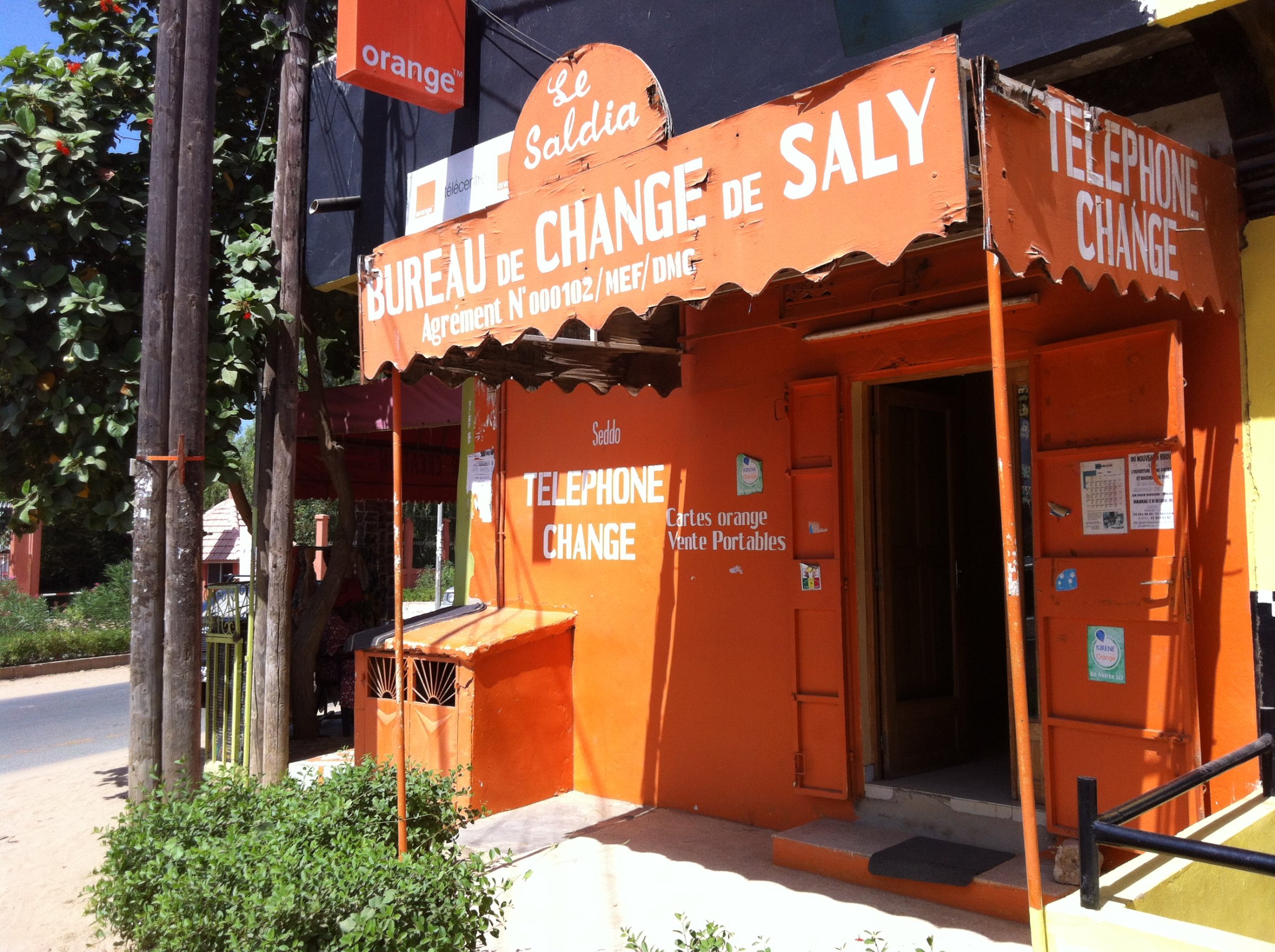
Among these “new empires” of France in Africa are long-established colonial heirs as well as new players: Somdiaa (Vilgrain family) in sugar; the brewer Castel; Bolloré, which shed its tobacco, logistics, port, and transport holdings but returned through television; Saur International (a former Bouygues subsidiary) and its competitor Vivendi, which share the water and energy sectors across nearly a dozen countries; and France Télécom/Orange in telecommunications (the continent’s second-largest operator). Starting from the former colonies, these actors have expanded beyond the traditional sphere of influence.
Strong growth driven by oil production
Between the early 2000s and the mid-2010s, the stock of direct investment by French companies increased tenfold outside of former colonies. However, these figures should be viewed with caution, as they are largely driven by the growth of financial transactions between subsidiaries of the same multinational. This explains why the Cayman Islands, Bermuda, and the British Virgin Islands have climbed into the top 15 territories investing in Africa.
This very strong growth is essentially driven by the Angolan and Nigerian extractive sectors. In the mid-2010s, these two countries alone accounted for “nearly half of French investments in Sub-Saharan Africa, just as they now account for the bulk of the decline in these investments, with a 47% drop in stock since 2016 for Angola and 34% for Nigeria.” Outside of these two oil-producing countries, French investment remains very limited. If Angola and Nigeria are excluded, “just over half of French corporate investments south of the Sahara remain concentrated in former colonies.”
Still within the former colonies, competition from China and other emerging nations — often brandished as the cause of “French decline” — is contained. In fact, rent-seeking situations persist more than sixty years after independence. French market shares in the former colonies have stabilized since the 2010s, hovering between 10% and 12%. “A strong performance, nearly six times higher than France’s market share in the rest of Africa and four times higher than in the rest of the world.”
Chinese market shares in these countries are, on average, 5.5% lower than in other countries on the continent. Investments by Chinese companies “surpass those of French multinationals in only a limited number of countries—specifically where they control all or part of oil extraction, or where they hold significant stakes in the mining sector.”
Considering the internationalization of capital and the growing autonomy of multinationals from the State, defining “French” interests in Africa today has become a complex task. For instance, the parent company of Castel is based in Singapore, while the group’s African assets are held in Luxembourg and Gibraltar. One-third of CAC 40 companies are majority-owned by foreign shareholders, and large French corporations occasionally find themselves at odds with political leadership in Paris. Conversely, some companies that have come under foreign control “maintain a significant French footprint,” with operations in Africa that have a meaningful impact on the French economy. Consequently, several major companies — formerly French but now foreign-owned — hold seats on the board of the French Council of Investors in Africa (CIAN). As for determining whether these interests are “strategic,” the report’s authors define the term based on the “capacity for supply substitution.” They cite the example of the French nuclear sector, which has considerably reduced its dependence on Nigerien uranium since the early 2000s by diversifying its suppliers. Naturally, these dependencies evolve over time, as the geopolitical context is, by its very nature, volatile.
