Edited by Afrique XXI
The images emerged at the end of August. First came those filmed at the entrance to a concert by the Tanzanian star Diamond Platnumz in Kigali on 29 August. Women in miniskirts were pulled aside and told by bouncers that they could not enter the huge BK Arena complex. Their offence? Wearing outfits deemed provocative. Rwandan social media soon erupted, led by well-known figures such as Michèle Iradukunda, a journalist at the Rwanda Broadcasting Agency, who immediately denounced the “humiliation” of the concertgoers1 and the subjectivity of the judgements made about their clothes.
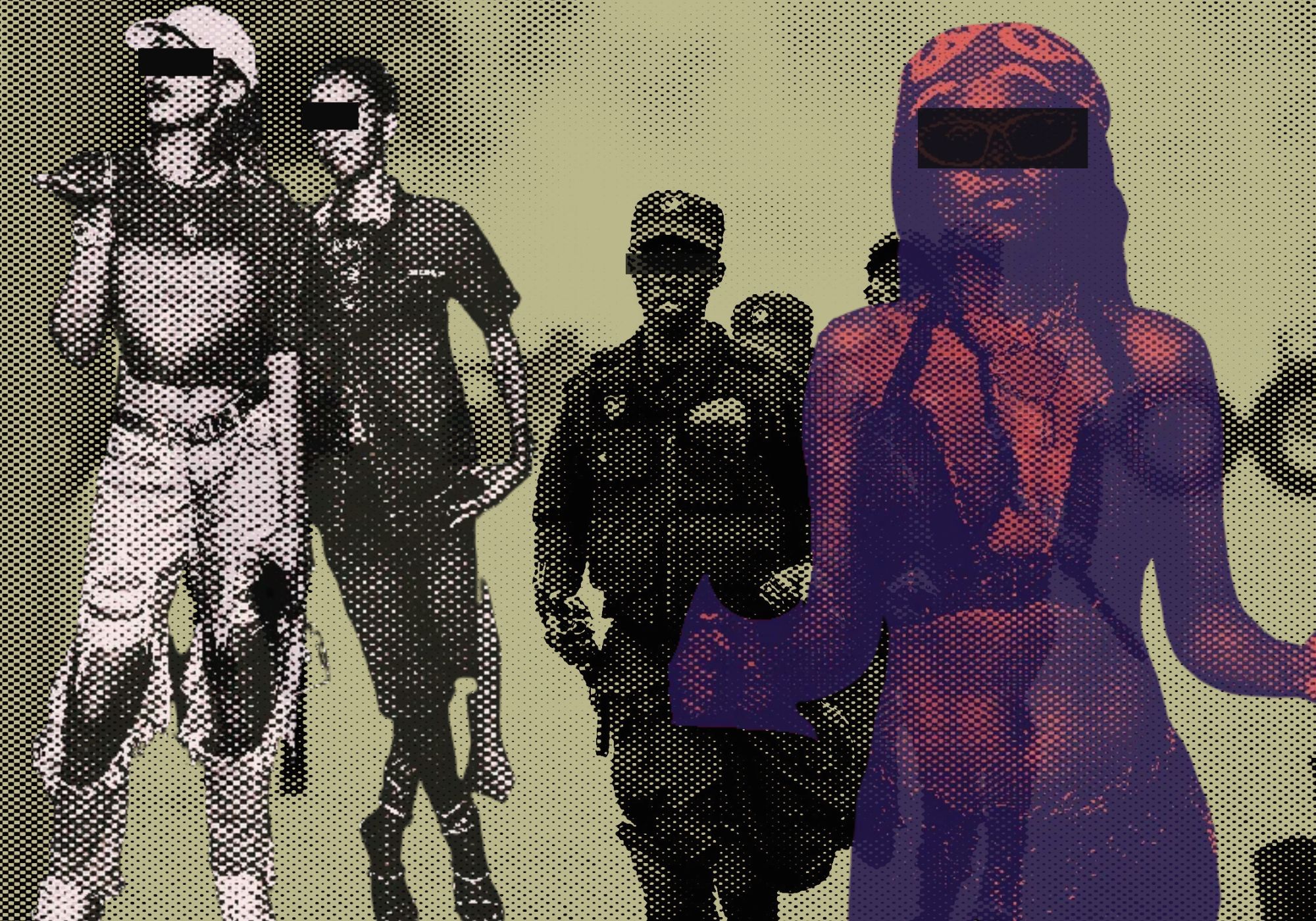
But the video that really lit the fuse began to circulate the next day. At the Rubavu bus station, a woman in a short black dress was arrested by police2, again because of what she was wearing. She was forced into the back of a pick-up truck. The footage, filmed by a bystander, looks like a hazing ritual. The young woman, handcuffed and perched on high heels, contorts herself to climb into the vehicle, watched by a grinning police officer and applauded by the crowd.
This time, the reaction set the internet ablaze. The controversy even spread beyond Rwanda’s borders, with media personalities in Kenya and Uganda weighing in3. But the most telling interventions came from women living in Rwanda itself, where criticism of public policy is rare. The outrage is also being voiced by figures who openly support the head of state, Paul Kagame. They include the model and former Miss Rwanda Jolly Mutesi, who described the scene as “very painful to watch”4.
A law too vague, critics say
Many Rwandan women share that feeling. The influencer Zuba Mutesi called it a “heartbreaking” scene5. The researcher Assumpta Mugiraneza, who heads the Iriba Multimedia Centre for Heritage in Kigali, even admits that she refused to watch the video of the young woman arrested in Rubavu. “I am afraid of letting those images lodge themselves in me for the rest of my life, and I am afraid of feeling ashamed as a member of my community,” she says over the phone.
Public criticism quickly turned to the law behind the arrest. Article 143 of Rwanda’s penal code punishes “public indecency” and “indecent acts in public” with up to two years in prison. The model Jolly Mutesi called the text too vague. “If the law says people must dress decently, then define what ‘decent’ means,” she wrote on social media. “We all come from different backgrounds, and we can hold very different views on what may or may not violate the law.”
Faced with the wave of outrage, the Rwanda National Police were forced into a mea culpa6. The next day they announced that the officers seen in the video had been arrested and placed in detention. “Instructions have been given to all police officers, along with stern warnings,” the force’s X account said, “to ensure that such incidents do not happen again.”
A crackdown the authorities stand by
The Rubavu incident was not, however, simply the work of overzealous officers. As early as 8 August, the Rwandan police spokesperson had announced at a press conference that surveillance of “indecency” in public places and on social media would be stepped up. In the following days, the managers of nightlife venues were summoned to the police station and urged to check their female customers’ outfits at the door. The owner of a Kigali bar told the Belgian magazine Axelle7 that he had been forced to “sign a pledge, on pain of sanctions or closure”.
Mugiraneza finds it incomprehensible. “We are creating segregation against girls, in a country where division and discrimination are banned. It’s even in the Constitution.” Rwanda has made gender parity a political priority, and women now hold 64 % of seats in its parliament.
The silence of the political class is a sign of the unease. Sandrine Umutoni, the Minister of State for Youth and the Arts, was one of the few Rwandan officials to speak out at the start of the controversy8. But she preferred to steer the debate towards the question of outside cultural influences. “When concerns are raised about increasingly daring fashion trends, the debate quickly degenerates into ‘Why does the state want to control our bodies?’,” she wrote on social media. “But perhaps we should also ask: who shapes these trends in the first place, and why?”
Dress, a colonial legacy
On 21 October, nearly two months after the controversy, President Paul Kagame himself returned to the subject at a meeting with 10,000 young Rwandans at the BK Arena. “Imagine someone coming here as if he or she were at the beach. Would that work?” he said, in a clip posted on social media. “When you say, ‘we have seen this elsewhere, so let us do the same thing here’ […], society can tell you: ‘we are not there yet. Maybe we are heading in that direction, but we are not there yet.’”
Yet, Mugiraneza points out, before colonisation Rwandans “wore very little, often just skins”. “Children generally didn’t even wear clothes. They were dressed once hair appeared on their pubis, and according to each family’s social standing. But young girls could go bare-breasted and nobody called them naked.”
The same was true in other parts of Africa. In “Les vieux habits de l’Empire. Façonner le sujet colonial”, an article published in 1994, the anthropologist Jean Comaroff describes the efforts of nineteenth-century British missionaries to clothe the inhabitants9 of what is now South Africa. “[Their] first moves were to cover African ‘nakedness’.” Yet “what the [Europeans] took for indecent exhibition was clearly neither the result of an absence of clothing, nor an impropriety in the eyes of the natives.”
“Dressed only in sunlight”
“Other aspects of how an adult body was presented, notably leaving the genitals uncovered and the hair uncombed, were considered crude,” the scholar goes on. “African dress and bearing were judged inadequate by European standards, but they conveyed, as everywhere, complex distinctions of gender, age and social identity. In their apparent nakedness, Africans were fully dressed.”
Mugiraneza takes the same view. “Calling someone naked and passing a moral, sometimes religious, judgement on it has its roots rather in colonisation, when bodies began to be covered, when people began to say a body was bad, when the idea of sin entered society.” She cites the Rwandan language as proof. “In proper Kinyarwanda, you never say that someone is naked. You say ‘yambaye izuba’: that they are dressed only in sunlight.”
Finally, Mugiraneza points to the silence of the international community or, as she prefers to call it, “the third party”. “Many of the ambassadors in our country are women: France’s, Germany’s, the United Kingdom’s, the Netherlands’… I would have liked them to get together and reach out to their counterparts in the Rwandan ministries.” That silence echoes, in her view, how other countries generally deal with Kigali. “Rwanda has been looked at strangely since 1994 [and the genocide against the Tutsi]. It’s as if people don’t really dare say no to it, because the current regime is the one that emerged from the victims. But being a victim doesn’t make you a better person.”

2Video of the arrest at the Rubavu bus station, Instagram post.
7Théodore de Kerros, “Au Rwanda, le corps des femmes sous surveillance”, Axelle, No. 269, October-December 2026, online article.
9Jean Comaroff, “Les vieux habits de l’Empire. Façonner le sujet colonial”, article published in Anthropologie et Sociétés, vol. 18, No. 3, 1994, online on Érudit.