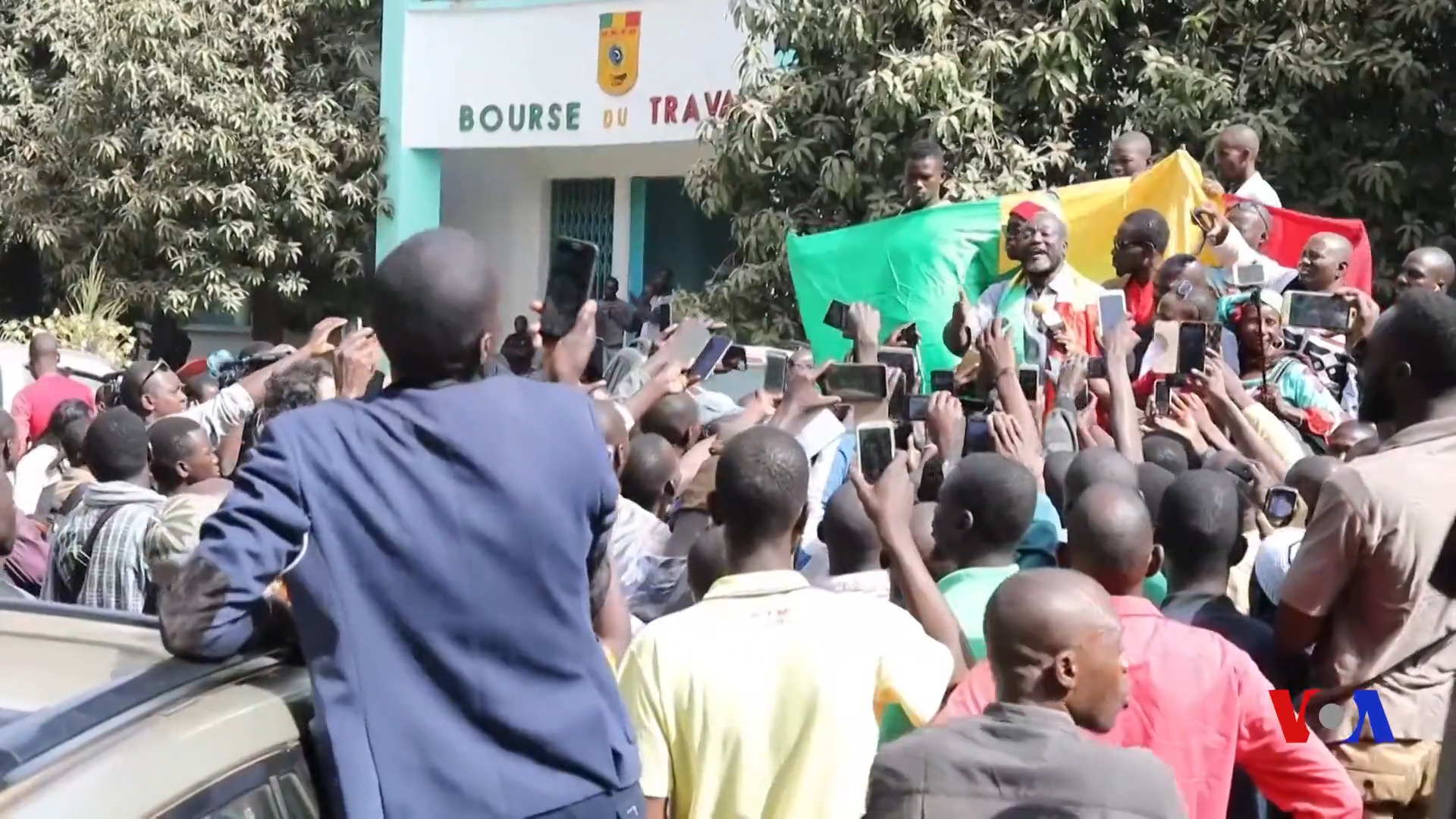
Early 2012. Images said to show the bodies of Malian soldiers killed at Aguelhok circulate on phones and on Facebook, still unauthenticated. For many Malians, the massacre is one of the first direct brushes with the brutality of the new war. Further images will follow, on a growing scale: soldiers and civilians killed, villages attacked, prisoners humiliated.
These images do not cancel one another out. Each new scene reopens earlier defeats and deepens the sense of a country permanently exposed, unable to protect its citizens or its soldiers.
What sets the 2012 crisis apart from earlier rebellions is not only its gravity but the way it is experienced. The American social network is less widespread than it is today, but its use is growing. Discussion groups are already being used to inform, debate and mobilise around the crisis1. Through private radio stations, international channels and content shared on phones, Malians follow almost in real time the defeat of their army and the loss of part of their territory.
Kidal, Gao and Timbuktu fall in turn, while the authorities speak of “tactical withdrawals”, a phrase widely read as a euphemism for a rout. The Mouvement national de libération de l’Azawad (MNLA) meanwhile takes over the media space. Its spokespeople appear in the international press and use the platform to present a secular, independence-seeking and well-organised movement. The network is not just a means of communication: it allows the MNLA to build an “Azawadian” political identity, mobilise the diaspora, internationalise its cause and bypass traditional diplomatic channels2. The military confrontation is thus joined by a battle to impose the meaning of the war.
Military defeat and “media humiliation”
Bamako loses not only control of part of the territory but also the battle of narratives. For many Malians, the country is under attack while being described to the world by those fighting it. Military defeat is compounded by “media humiliation”: Aguelhok and the fall of the northern towns are photographed, shared and commented on.
This shock contradicts a view of national history built on the great empires and on the “heroisation” of pre-colonial figures and of those who resisted the conquest3. This narrative was meant to nourish national pride and unity. Seeing the army in disarray brutally exposes the gap between the grandeur of the past as told and the powerlessness of the present as lived.
This humiliation changes political expectations. Part of the population no longer looks merely for a government capable of administering the country. It wants a power able to restore the authority of the state, rebuild the army and give the nation back its dignity.
Even before the coup of 22 March 2012, some private media outlets and discussion forums give the defeats a virulent political reading. Radio Kayira is part of this critical environment. Rumours accusing President Amadou Toumani Touré (ATT) of weakness, even of complicity with the rebels, circulate in the media and in conversation. Though unproven, they help turn military setbacks into proof of betrayal at the top4.
IBK and the grandeur of the past
The coup that follows feeds on this anger. The soldiers promise to equip the army better and restore the authority of the state. Yet the seizure of power disrupts the chain of command and isolates the country. Armed groups quickly take Kidal, Gao and Timbuktu: presented as a response to defeat, the putsch hastens its consequences5.
The return to civilian transition opens the way to an internationalisation that Bamako itself requests. In September 2012, Dioncounda Traoré asks the Economic Community of West African States (Ecowas) for military support to retake the north. The request leads to a framework bringing together Ecowas, the African Union and the United Nations, and then to the authorisation of the African-led International Support Mission to Mali6 (Afisma).
The election of Ibrahim Boubacar Keïta (IBK) in 2013 also reflects the search for a restorer. His campaign contrasts the fragility of the country with the grandeur of its past and presents him as the answer to the quest for national restoration7. With “Le Mali d’abord” (“Mali first”) and his image as “Kankélétigui” (“the man of his word”, in Bambara), IBK revives his reputation as a strongman, associated with firmness and the return of authority.
His victory cannot be put down to this factor alone. It nonetheless shows that the need for a strong leader and for the restoration of sovereignty long predates the current transitional government (led by Assimi Goïta, who came to power in a coup in May 2021) and its geopolitical realignment in favour of Russia. As early as 2013, the promise of national recovery had already proved its power to mobilise.
Kidal, a stolen victory, an unfinished sovereignty
In January 2013, the French intervention is presented as an urgent response to the advance of armed groups towards the south, requested by the transitional Malian authorities. This account, however, oversimplifies a more complex sequence: nothing proves that a single “jihadist column” was heading for Bamako, and the intervention had been preceded by intense diplomatic activity and military planning8. Operation Serval retakes Gao and Timbuktu. François Hollande is welcomed as a liberator.
This gratitude, however, rests on an immense expectation: the war is supposed to lead swiftly to the restoration of territorial integrity. When French and Chadian forces enter Kidal without the Malian army and the MNLA becomes an interlocutor again, part of public opinion experiences the episode as a fresh dispossession. Kidal becomes the symbol of a stolen victory and an unfinished sovereignty.
Serval follows a logic of reconquest carried out in haste. The operation that succeeds it, Barkhane, then adopts a regional counter-terrorism strategy, while the UN Multidimensional Integrated Stabilization Mission in Mali (Minusma) is meant to stabilise populated areas, protect civilians and support the political process. These actors have different mandates: containing the threat is not necessarily the same as delivering the total victory that was expected.
Support nonetheless remains guarded. As early as January 2016, Foreign Minister Abdoulaye Diop invites the Security Council to consider an “exit strategy” for Minusma, without calling for its immediate withdrawal9.
The gap between containing the threat and winning the war
After the coups of 2020 and 2021, the diplomatic rupture gradually dismantles this international architecture: Barkhane and Takuba withdraw, the operational activities of the European training mission are suspended, and in 2023 the government asks for Minusma to leave10.
For a large part of public opinion, these institutional distinctions count for little. All of these forces are judged against the same expectation: to defeat the armed groups and allow the state to retake the entire territory. The gap between containing the threat and winning the war gradually breeds incomprehension.
Despite the scale of foreign resources, attacks persist and violence is intensifying in the central regions. A question takes hold: how can so many forces be present without ending the insecurity? The failure is then sometimes attributed to a supposed desire on the part of the partners to keep the conflict going. Nothing establishes such an intention, but the gap between their operational objectives and the expectation of total victory makes the suspicion politically credible.
Influence narratives did not arrive on virgin ground. They reactivate real wounds by giving them an explanation, culprits and a promise of revenge. They can combine established facts, slanted interpretations and false or unverifiable claims. The challenge is to understand the conditions that make them credible.
The arrival of the Russians and anti-colonial imaginaries
Their mechanics are simple: recall a humiliation, name a culprit, then present a saviour. Aguelhok, Kidal and persistent insecurity become evidence of a single abandonment. Political leaders, France or the international community are blamed for Mali’s powerlessness; the army or a new foreign power is then presented as the solution able to restore national dignity.
The arrival of Russian soldiers in Mali in late 2021, after a brutal reshuffling of geopolitical alliances, is not merely a military turning point. It comes with an influence apparatus broadly comparable to the one previously deployed in the Central African Republic.
In Mali, however, this apparatus does not start from scratch. Today’s discourse on sovereignty belongs to the long history of anti-colonial imaginaries, based in particular on territorial integrity, pan-Africanism and the rejection of foreign domination11. The humiliations accumulated since 2012 did not create this political language: they charged it with new emotional force.
This apparatus also meets movements, activists and content creators who are already sovereigntist, pan-Africanist or hostile to the French presence. Organisations such as Yèrèwolo and video makers translate and popularise these messages in Mali’s political idiom. These “videomen” act as intermediaries or “cyber-griots”, in the sense that they interpret the messages and adapt them to the frustrations of their audiences12.
The internet and the co-production of narratives
The narrative put out rests on simple oppositions: France betrayed or humiliated Mali; Russia respects its sovereignty and gives it the means to win; the military leaders embody a new independence. After the “Russian turn” of 202113, the transitional authorities present themselves as able to wash away past humiliations and lead the country to victory.
The effectiveness of these narratives owes less to their foreign origin than to their ability to graft themselves onto an established memory: Aguelhok, Kidal, unfulfilled promises of reconquest and the impression that the partners contained the war without allowing Mali to win it. Russia did not create the desire for sovereignty or the resentment of France; its networks supplied them with a coherent interpretation, culprits and a saviour.
Changing digital habits give this encounter new reach. According to a study by the Carnegie Endowment14, internet access rose from 2.8 % of the Malian population in 2012 to around 35 % in early 2024. Facebook hosts public debate and its polarisation, while WhatsApp allows much wider diffusion, notably through voice messages. A claim posted on Facebook or X can be reworked as a video, then circulate in WhatsApp groups, where its origin becomes hard to trace. Since 2023, TikTok has further strengthened this circulation across platforms.
Influence thus appears less as a “manipulation” imposed entirely from outside than as a co-production. External networks supply content, resources and a geopolitical framework; Malian actors select and reformulate them according to their own struggles. This is what makes some narratives resistant to “fact-checking”: even when debunked, a falsehood can keep convincing when it is grafted onto a real political wound, a humiliation or an expectation of justice.
Examining historical experiences
The rejection can go further: even factual evidence presented by a media outlet or an organisation can be dismissed when it seems to call into question an actor, a decision or a symbol regarded as indispensable to final victory over “the enemy”. In such cases the discussion is no longer only about the strength of the evidence: accepting it is also read as a question of loyalty to the camp one identifies with.
Fact-checking remains indispensable, but it is not always enough. Showing that an accusation is false does not make disappear the feeling that makes it credible. Understanding this mechanism is not the same as excusing disinformation: it shows that influence campaigns succeed when they turn a collective wound into a demand for a saviour.
This reading therefore warns against reducing the phenomenon to platforms, algorithms or false content. It is also necessary to examine the historical experiences, power relations and political expectations that make certain narratives acceptable. Social media speed up their circulation; they do not, on their own, explain their echo.

1Boukary Sangaré, « Réseaux sociaux et communication en temps de crises au Mali : l’exemple des groupes de discussion sur Facebook », in ECAS 2013, « 5th European Conference on African Studies: African Dynamics in a Multipolar World », Lisbon, Centro de Estudos Internacionais, 2014, pp. 1919–1942.
2Michael Keen, Azawad’s Facebook Warriors: The MNLA, Social Media, and the Malian Civil War, New York, Peter Lang, 2021.
3Ibrahima Baba Sidibé, « Les relations franco-maliennes à la recherche d’un nouveau souffle », in Gemdev and Université du Mali (eds), Mali-France : regards sur une histoire partagée, Paris, Karthala, 2005, pp. 341–362.
4Julien Gavelle, Johanna Siméant and Laure Traoré, « Le court terme de la légitimité : prises de position, rumeurs et perceptions entre janvier et septembre 2012 à Bamako », Politique africaine, no. 130, June 2013, pp. 23–46.
5International Crisis Group, « Mali : éviter l’escalade », Rapport Afrique, no. 189, 18 July 2012.
6Mission de l’Union africaine pour le Mali et le Sahel, « Historique de l’opération MISMA » ; United Nations Security Council, Resolution 2085 (2012), 20 December 2012.
7Nanourougo Coulibaly, « Posture discursive et victoire électorale : le cas d’Ibrahim Boubacar Keïta au Mali », Argumentation et Analyse du Discours, no. 13, 2014.
8Grégory Daho, Florent Pouponneau and Johanna Siméant-Germanos (eds), Entrer en guerre au Mali. Luttes politiques et bureaucratiques autour de l’intervention française, Paris, Éditions Rue d’Ulm/Presses de l’École normale supérieure, 2022, pp. 5–29, especially pp. 9–11.
9United Nations Security Council, 7,600th meeting, « La situation au Mali », S/PV.7600, 11 January 2016. The request is made by Abdoulaye Diop, Mali’s foreign minister.
10International Crisis Group, « Mali : éviter le piège de l’isolement », Briefing Afrique, no. 185, 9 February 2023 ; United Nations Security Council, Resolution 2690 (2023), 30 June 2023.
11Eva Magdalena Stambøl, Almamy Sylla and Signe Marie Cold-Ravnkilde, “Anticolonial Imaginaries in Mali: The Longue Durée of Sovereignty, Security, and Geopolitics”, Geopolitics, vol. 31, no. 4, 2026, pp. 1261–1286.
12Stine Maya Cold-Ravnkilde, Morten Bøås and Boubacar Ba, “The rise of Mali’s ’videomen’ as cybercombatants in global crisis ecologies”, International Affairs, vol. 100, no. 4, 2024, pp. 1405–1422.
13International Crisis Group, « Mali : éviter le piège de l’isolement », Briefing Afrique, no. 185, 9 February 2023.
14Mirjam de Bruijn, “Digital Communication as a Weapon: The Case of Mali”, Carnegie, 4 October 2025.