Beatrice Wangui, an indigenous farmer in Gilgil, a small Rift Valley town, no longer feels the need to scrutinise visitors to her home for fear they might be covert government seed inspectors ready to pounce on her.
For years, the smallholder farmer—who tills roughly an acre and stocks indigenous seeds (mbegu za kienyeji)—lived cautiously. The government, under the Seeds and Plant Varieties Act, could arrest anyone merely for exchanging seeds with a neighbour, subjecting them to a jail term of up to two years or a fine of up to KSh1 million.
“Even when it was illegal, I still exchanged seeds discreetly. I couldn’t stop—it’s what we’ve done since time immemorial,” Wangui says. “In African villages, we are raised on the virtue of sharing. How could I watch my neighbour fail to plant his land and deny him seeds simply because they were indigenous?”
Now in her 40s, Wangui speaks as she displays handfuls of multicoloured seeds — a motley collection of browns, creams and deep purples. They bear little resemblance to the uniform, glossy hybrid seeds sold in town, which until recently were the only ones legally allowed to be shared in Kenya.
Dozens of indigenous varieties
At her homestead stands a wooden seed bank housing dozens of indigenous varieties. Until recently, she shared them only with trusted friends, turning away anyone who looked “suspicious,” lest they be government officers out to arrest her.
That fear was lifted on November 27, 2025, when the High Court overturned provisions of the law that criminalised the exchange of indigenous seeds. For Wangui, the ruling corrected what she believes was a historical injustice rooted in colonial-era legislation introduced in 1973— laws she says favoured multinational seed companies dominating Kenya’s formal seed market, estimated to be worth KSh45–50 billion (about USD 350–400 million) annually.
Key crops in the industry include maize, wheat, beans, potatoes and horticultural varieties, with about 70–80 active seed companies. Multinationals such as SeedCo, Syngenta and East African Seed, all foreign owned, dominate the market, commanding the largest share1.
Seed sovereignty
Unlike large corporations driven primarily by profit, seed savers — ranging from individual growers with small plots like Wangui to school garden groups and small-scale farms —collect, preserve and replant open-pollinated (OP) seeds rather than relying on varieties produced by multinational companies. These seeds are often shared through informal networks, exchanged as gifts between friends or distributed during community seed fairs and events. Because open-pollinated seeds are not owned or controlled by private companies, they remain in the public domain. This principle of seeds as a shared public resource is commonly referred to as seed sovereignty.
“For generations, informal seeds were more than crops,” says Wangui. “They were a covenant between families and the land— stories written into every drought-resistant kernel. Yet the state made owning them feel like holding contraband.”
Wangui was one of fifteen petitioners in the landmark case against the government. For her and farmers like Samuel Wathome, the Seeds and Plant Varieties Act, as amended several times, latest being in 2016, did not feel like regulation— it felt like the criminalisation of their existence. As detailed in their petition, sections such as 10(4)©, (d), (e), (f) and (g) made it an offence to sell, share or exchange unregistered and uncertified seeds.
Indigenous and unindexed seeds
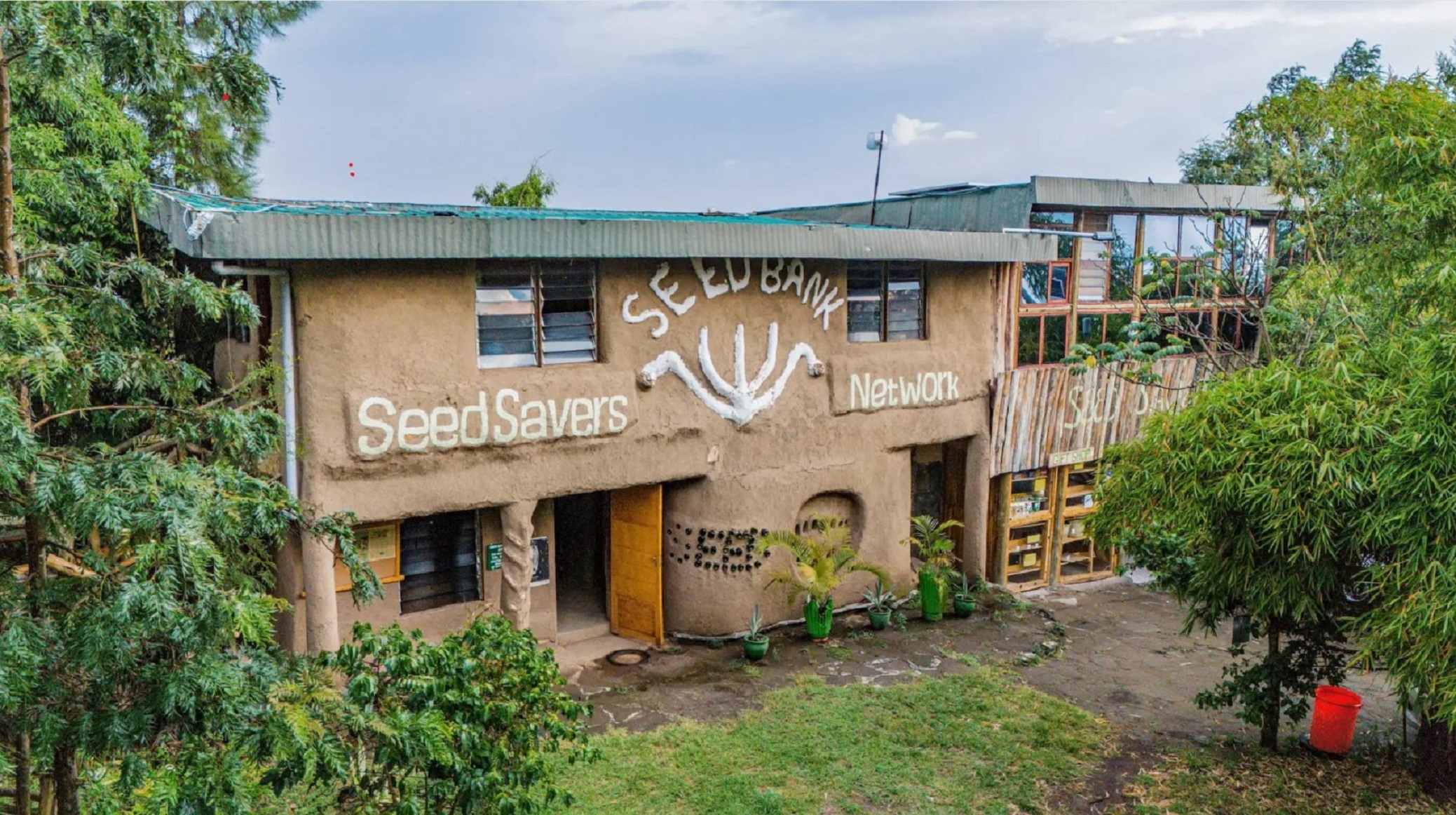
Daniel Wanjama, who runs Seed Savers— one of Kenya’s largest indigenous seed banks in Nakuru —and was among the key actors behind the petition, told Afrique XXI that by demanding registration and certification, the Act stripped seeds of their “indigenous character”— an identity nurtured by small-scale farmers over centuries.
Section 8(1), in particular, prohibited the sale of “unindexed” plant varieties, effectively banning the commercial trade of indigenous seeds that define local agricultural heritage—despite protections under the Constitution and international treaties.
“The traditional farmer was left watching multinationals import seeds and repackage them for resale,” Wanjama says. “Farmers feared even selling their own seeds— whose drought and disease resistance is proven locally —because officials could descend on them unannounced.” Worse still, he said in an earlier interview before the judgment, that multinationals would pirate indigenous seeds known in Africa for generations and pass them off as their own, exploiting the fact that ordinary farmers lack the resources to patent and protect their seeds.
Save families from hunger
With key sections of the Act declared unconstitutional, he says the priority has now shifted to creating awareness of the court’s ruling— an effort he believes will naturally encourage freer seed sharing and the establishment of community seed banks across the country. “This will support vulnerable farmers who cannot afford costly hybrid varieties. Indigenous seeds are cheaper to maintain, more resilient to pests and drought, and can help save families from hunger.”
Alfred Omondi, a smallholder farmer who keeps a seed bank at his home in Butere constituency, western Kenya, told Afrique XXI that he has followed the case since it was filed about two years ago. “I’ve already called my village mates and informed them of the developments,” he said. “We are no longer hiding our seed-sharing heritage.”
Studies by the Farm to Market Alliance, an organisation that supports farmers’ access to open markets, show that smallholder farmers— estimated at about 7.5 million in Kenya —produce and supply more than 80 per cent of the seeds used in Africa through informal systems, including farmer-saved seed, local markets and community exchanges2 This “informal” sector with farmers cultivating on less than 2 Ha remains the most resilient and reliable seed system for most African farmers.
An East African issue
Yet across East Africa, the East African Community’s Seed and Plant Varieties framework— designed to harmonise standards and facilitate regional trade —largely supports certified seeds, leaving indigenous seed sharing by such farmers on the fringes and under national jurisdiction.
Uganda stands out. Its National Plant Genetic Resources Act, 2022 explicitly recognises farmers’ rights to save, use, exchange and sell unprotected seed from their harvest—a cornerstone for indigenous seed exchange. Uganda is also a party to the FAO’s International Treaty on Plant Genetic Resources for Food and Agriculture (ITPGRFA), which upholds these rights.
Tanzania, by contrast, allows farmers under its Seed Act of 2003 to save seed for their own use but is silent on exchange. In practice, bartering uncertified seed could still be construed as an offence, especially if it goes beyond small, informal gifting—creating tension with Tanzania’s commitments under the same international treaty.
Discrimination and right to food
Even so, Kenya’s law was among the most punitive, leaving indigenous seed holders in constant fear and driving them to court.
Farmers’ affidavits detailed that fear. Inspectors from the Kenya Plant Health Inspectorate Service (KEPHIS), empowered under Section 3D(1), could enter, search and seize seeds on “reasonable belief.” The petitioners anchored their case in the Constitution— arguing the law violated Article 11 on culture, which obligates the state to protect indigenous knowledge, and Article 43(1)© on the right to food. By restricting access to seeds— the first link in the food chain —the Act threatened their survival.
They also challenged the KSh75,000 mandatory merchant registration fee, with a KSh10,000 annual renewal, calling it an insurmountable barrier for resource-poor farmers and a form of indirect discrimination under Article 27.
The loss of overt 100 seed varieties
Today, just four monied corporations—BASF, Bayer/Monsanto, ChemChina-Syngenta and Corteva Agriscience—control more than two-thirds of global seed and pesticide sales3.
“We documented the loss of over 100 seed varieties in Kitui, Kakamega, Turkana and Baringo over the past 20 years,” Wanjama says. “The Act that has been termed unconstitutional is partly to blame.” The UN Food and Agriculture Organization estimates that the world has already lost about three-quarters of its plant genetic diversity since the early 1900s, with nearly 93 per cent of distinct seed varieties disappearing over the past century alone.
Omondi, the farmer from Butere, is optimistic that many of the lost seed varieties can still be recovered. “I believe farmers simply hid them out of fear of the law,” he says. “I hope that situation remains unchanged and that the government’s appeal against the judgment does not succeed. If the ruling stands, farmers will come out of the shadows with the varieties they have preserved, and we will be able to share and plant them freely once again.”
An unequivocal judgement
Although the government has filed a notice of appeal through the artoney general Dorcas Oduor — arguing the controversial Act was meant as a shield to protect farmers from poor-quality seeds —the High Court remain unequivocal.
“Most Kenyan farming communities practise seed saving, exchange and sharing as a facet of indigenous technologies,” the court ruled. “These unique cultural practices cannot be legislated away.”
Justice Rhoda Rutto also found the inspectors’ powers violated rights to privacy and fair administrative action, noting the absence of safeguards and avenues to contest seizures. The merchant fees, she ruled, placed small-scale farmers at a disadvantage and were indirectly discriminatory.
In the end, the offending sections were declared unconstitutional. For Wangui and thousands like her, the seeds in their palms are no longer potential evidence in a criminal case. They are, once again, simply seeds—enduring, life-giving, and free.
